
8 Africa
Africa is a hopeful continent with a young population, and by 2050 it is expected to account for one-quarter of the world’s population. With abundant natural resources and significant potential as an economic market, the region is anticipated to demonstrate dynamic growth. At the same time, Africa faces various challenges, including poverty, fragile health systems, and the rise of terrorism and violent extremism.
To address these challenges, African countries pursue sustainable development under “Agenda 2063,”Note 30 Africa’s own development framework. Amid developments that continue to challenge the foundation of the international community, such as Russia’s aggression against Ukraine, coordinated international responses have become more important than ever. In this context, Africa’s position in the international community has shifted significantly, and its importance and influence as a major global actor continue to grow. For these reasons, it is essential to further strengthen cooperation with African countries.
●Japan’s Efforts
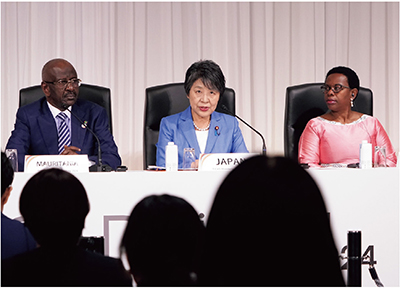
Then Foreign Minister Kamikawa (center) with Mauritania’s Minister of Foreign Affairs, African Cooperation and Mauritanians Abroad, Merzoug (left), serving as co-chairs at the 2024 TICAD Ministerial Meeting
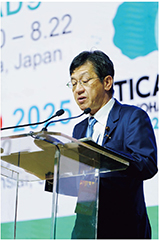
Then Parliamentary Vice-Minister for Foreign Affairs Matsumoto delivering remarks at the 3rd Japan-Africa Public-Private Economic Forum
After the end of the Cold War, when developed countries’ interest in supporting Africa had waned, Japan underscored Africa’s significance and took the pioneering step of launching the Tokyo International Conference on African Development (TICAD)Glossary as a testament to its commitment. Guided by the principle of supporting African-led development, Japan has consistently emphasized the importance of African “ownership” and international “partnership.” Together with a wide range of stakeholders, including international organizations, the private sector, and civil society, Japan has fostered substantive dialogue aimed at advancing Africa’s development. TICAD 9 is scheduled to take place in Yokohama in 2025, from August 20 to 22.
In April 2024, then Foreign Minister Kamikawa visited Madagascar, Côte d’Ivoire, and Nigeria to strengthen economic relations and connectivity, as well as to enhance cooperation on global issues, including the rule of law and Women, Peace and Security (WPS).Note 31 In August, the TICAD Ministerial Meeting was held in Tokyo under the theme, “Co-create innovative solutions with Africa.” The meeting brought together representatives from 47 African countries, international organizations, private companies, parliamentarians, and civil society organizations. With a strong emphasis on listening carefully to views expressed by the African side, participants advanced discussions through dialogue under three perspectives: future-oriented problem-solving, youth and women, and connectivity and knowledge platforms. Discussions took place in three sessions on society, peace and stability, and economy.
The participants concurred on disseminating many innovative solutions and ideas shared during the discussion throughout Africa and contributing to addressing global challenges, and adopted a joint communiqué.
In December, the 3rd Japan-Africa Public-Private Economic Forum was held in Côte d’Ivoire, co-hosted by the Ministry of Economy, Trade and Industry (METI), the Japan External Trade Organization (JETRO), and the Government of Côte d’Ivoire. From Japan, then State Minister of Economy, Trade and Industry Ogushi and then Parliamentary Vice-Minister for Foreign Affairs Matsumoto Vice-Minister for Foreign Affairs Matsumoto participated together with representatives of Japanese companies. From Africa, around 20 ministers attended, including Côte d’Ivoire’s Prime Minister Beugré Mambé, as the co-host country, and some 1,200 public and private sector representatives from about 40 countries participated to engage in discussion on promoting cooperation between Japanese and African companies and to advance Japanese business activities in Africa.
■Economy
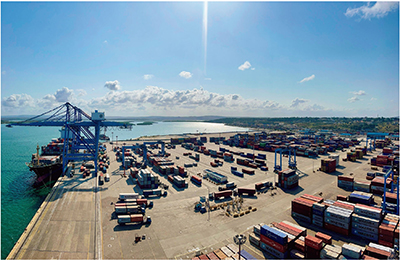
The container terminal developed under the “Mombasa Port Development Project” in Kenya, financed by a Japanese yen loan (Photo: Toyo Construction Co., Ltd.)
Japan aims to strengthen a free and fair international economic system to support a robust recovery from the effects of infectious diseases, the situation in Ukraine, and other challenges affecting the food, energy, and related sectors, while protecting people’s livelihoods. It also promotes green growth in each country, contributing to a resilient and sustainable Africa. In addition, Japan places special focus on vibrant young people and supports the expansion of private enterprises, including start-ups.
Japan places particular emphasis on human resources development for Africa. Over the three years leading up to March 2024, it has offered training opportunities to around 291,000 people across a wide range of fields, including industry, healthcare, agriculture, the judiciary, and public administration. In addition, as part of “investment in people” toward realizing quality growth, Japan has long promoted development. As of December 2024, the ABE InitiativeGlossary has offered training opportunities to over 9,000 youths from Africa. There are also good examples of ABE Initiative participants returning to their home countries after completing their training and applying the specialized knowledge and skills they acquired in Japan to find employment in Japanese companies, start their own businesses, and assume prominent positions in government agencies and universities in their home countries, while contributing to development in their own countries and the overseas expansion of Japanese companies.
Japan also promotes “quality infrastructure investment”Note 32 to enhance connectivity, focusing on three priority geographic areas.Note 33 In addition, by leveraging digital transformation (DX),Note 34 Japan supports logistics improvements through infrastructure development and One Stop Border Posts, while also working with the World Customs Organization (WCO) to build capacity in border control and tariff collection.
In response to worsening food security driven by multiple factors—including price increases caused by conflicts, terrorism, political instability, natural disasters, Russia’s prolonged aggression against Ukraine, extreme climate events, and infectious diseases—Japan provides both short-term support, such as food assistance, and medium- to long-term support aimed at enhancing agricultural production capacity. In 2024, Japan decided to provide grants to 32 sub-Saharan African countries facing severe food insecurity, such as hunger, food shortages, and malnutrition—with projects being implemented to deliver cereals such as rice, beans, vegetable oil, canned fish, etc., one after another. To strengthen medium- to long-term food production capacity, Japan also supports initiatives aimed at doubling rice production in Africa and co-financing approximately $320 million to the African Development Bank (AfDB)’s Emergency Food Production Facility. In addition, Japan provides capacity building support to train 200,000 agricultural personnel over the three-year period from 2023 and extends assistance to the fisheries sector. Japan will continue contributing to strengthening food security across Africa.
Japan is also engaged in cooperation on green growth, aiming for a structural transition to decarbonization. Specifically, Japan provides yen loans for geothermal power projects in Kenya and has been implementing technical cooperation for the development of power transmission lines and grid stabilization in Uganda, Kenya, Tanzania, Nigeria, and Mozambique. Furthermore, in Southern and Western Africa, Japan has launched region-wide technical cooperation, with a focus on human resources development and capacity building, toward the realization of stable power supply in the long run through intra-regional power interchange.
■Society
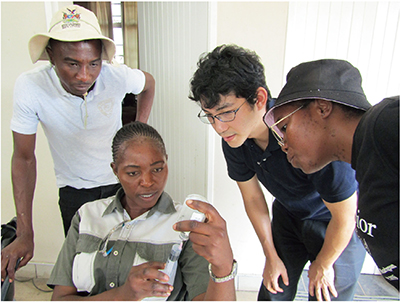
A JICA expert training agricultural extension workers in Namibia on the use of syringes for livestock (Photo: JICA)
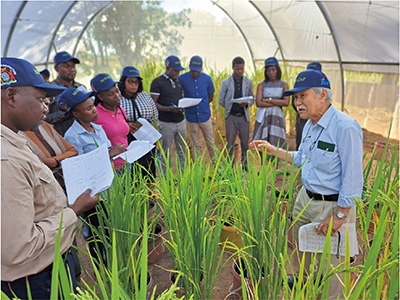
A JICA expert conducting training on superior seeds for producing high-yield, high-quality rice in Zambia (Photo: JICA)
At TICAD 8, Japan expressed its commitment to addressing widening disparities and to realizing a better living environment, in line with human security, the SDGs, and “Africa’s Agenda 2063.”
Infectious diseases control continues to be a major challenge for Africa. To respond to public health threats, including infectious diseases, Japan supports seven African countriesNote 35 through the United Nations Children’s Fund (UNICEF) in establishing immunization information management systems using digital technology. Furthermore, in cooperation with the Africa Centres for Disease Control and Prevention (CDC), Japan works on empowering medical personnel to strengthen support to the frontline hubs for infectious disease control.
Japan continues to strengthen health systems in Africa through international organizations and bilateral channels. Since TICAD 8, Japan has trained approximately 27,300 healthcare workers and 7,970 medical personnel and researchers specializing in infectious disease control. Through support like this, it has contributed to expanding medical services to 1.38 million people across Africa. Furthermore, with a focus on prevention, preparedness, and response (PPR) to future public health emergencies, it contributes to the achievement of universal health coverage (UHC)Note 36 in Africa, based on the principle of “leave no one’s health behind.” Since 2022, Japan has also supported projects in water, sanitation, and hygiene in 42 African cities since 2022.
In addition, Japan strives to improve access to quality education for youth and women. At TICAD 8, it made a commitment to providing quality education, including STEMNote 37 education, to 9 million people and to improving access to education for 4 million girls. Since then, Japan has helped to promote school enrollment, enhance inclusiveness, and provide school meals through technical cooperation and other initiatives. For example, since its launch in 2004, the “School for All” project,Note 38 designed to improve the learning environment for children through collaboration among schools, parents and guardians, and communities, has been rolled out to approximately 70,000 primary and junior high schools across nine African countries.
In Africa, it is also urgent to address the challenges arising from rapid urbanization. Under the “African Clean Cities Platform,”Note 39 Japan has been promoting public health improvements through waste management, as well as decarbonization and recycling initiatives, in 190 cities across 47 countries as of November 2024. It is also undertaking environmental initiatives, including the regular monitoring of forests through the JICA-JAXA Forest Early Warning System in the Tropics (JJ-FAST).
■Peace and Stability
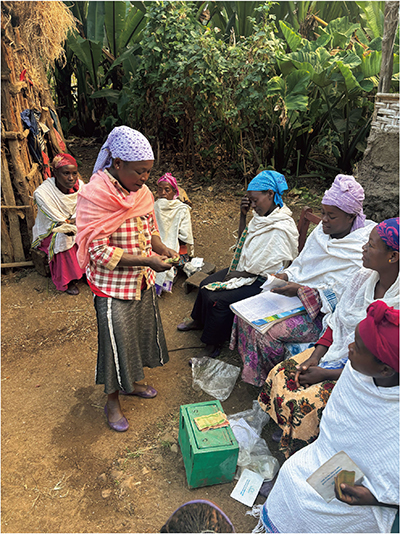
Women participating in group savings under the “Women’s Empowerment through Community Participatory Water Supply System in Oida” in Ethiopia (Japan’s Grant for Japanese NGO Projects) (Photo: Hope International Development Agency Japan)
At TICAD 8, Japan expressed its commitment to supporting Africa’s own efforts to achieve peace and stability, which are prerequisites for economic growth, investment, and better livelihoods. This support is provided under the “New Approach for Peace and Stability in Africa (NAPSA),”Glossary which aims to address the root causes that undermine human security as well as peace and stability. Japan continues to work steadily toward the realization of these goals.
The rule of law is essential for realizing peaceful and stable societies and sustainable growth. As specific support for Africa’s own efforts related to the rule of law, Japan assists in building institutions and strengthening governance in the judicial and administrative sectors, including through human resources development, supports the conduct of fair and transparent elections, and helps ensure public safety. Furthermore, to promote mutual understanding and cooperation between the government and citizens—the foundation of peace and stability—Japan supports initiatives where local governments and communities collaborate.
Japan assists Africa’s own efforts in mediation and conflict prevention by enhancing peacekeepers’ capability at Peacekeeping Training Centers in Africa and supporting regional organizations such as the African Union (AU). Since 2008, Japan has made available financial contributions amounting to over $110 million for projects for Peacekeeping Training Centers in 15 African countries and has dispatched over 60 Japanese instructors to develop the training capacity of these facilities and conduct training. Furthermore, Japan has provided an additional $8.5 million to expand the “UN Triangular Partnership Programme (TPP),” a support framework for peacekeepers, to deliver training to personnel deployed to AU-led peace support operations.
In the Sahel, under NAPSA, Japan contributes to regional peace and stability. In particular, with a focus on the vulnerabilities of administrative systems, it provides training for personnel involved in institution building, as well as vocational training and education opportunities for the youth. For example, to support stability in the Sahel, Japan, through the United Nations Development Programme (UNDP), implements a project to improve public services, including support for residents of the Liptako-Gourma region,Note 40 with a view to contributing to stronger community foundations.
Since South Sudan’s independence in 2011, Japan has supported the country’s nation-building efforts. Under the Act on Cooperation with United Nations Peacekeeping Operations and Other Operations (or the International Peace Cooperation Act), Self-Defense Forces personnel are deployed to the headquarters of the United Nations Mission in the Republic of South Sudan (UNMISS) as staff officers. Japan also supports South Sudan’s own peace process initiatives, including through the Intergovernmental Authority on Development (IGAD), a regional organization in East Africa. Alongside support for infrastructure development, human resources development, and food assistance, Japan contributes to consolidating peace and stabilizing the economy in South Sudan.
Moreover, in South Sudan, Japan supports the organization of “National Unity Day,” a nationwide sporting event to promote reconciliation, friendship, and unity among citizens. Since its inception in 2016, the event has been held annually by the Ministry of Youth and Sports of South Sudan. It is important for the international community to continue cooperating to consolidate peace in South Sudan, so that citizens can feel the consolidation of peace and prevent another conflict.
To maintain peaceful and stable societies, it is important not only to protect vulnerable people such as women in conflict situations, but also to enable women in leadership to participate in conflict prevention as well as humanitarian relief, recovery and reconstruction assistance. Japan supports Africa’s peace and stability from the perspective of advancing the WPS agenda as well (see “Japan’s Development Cooperation Initiatives to Promote WPS” regarding Japan’s WPS efforts).
Featured Project 12
Zambia

Project for Strengthening Management Capacity of the General Hospitals in Lusaka District / Project for Strengthening
Laboratory-based Surveillance for Infectious Diseases
Technical Cooperation (May 2021 – May 2026 / April 2023 – April 2028)
Improving Health Services and Reinforcing Infectious Disease Control – Measures Taken and Achievements in Response to a Cholera Outbreak –
In Zambia, particularly in the capital city Lusaka, with recent population growth, there has been a chronic shortage of primary-level hospitals providing basic medical care and existing hospitals are facing serious challenges in operations management and service quality. In addition, since the country’s infectious disease surveillance systems are insufficient, infectious diseases such as HIV/AIDS continue to be major causes of death, and outbreaks such as cholera have resulted in significant casualties.
Japan has worked to improve operations management capabilities to enhance service quality at five primary-level hospitals in Lusaka, which were built with previous grants by Japan. It has also supported capacity development at the Zambia National Public Health Institute (ZNPHI), the country’s central hub for infectious disease control.
In October 2023, Lusaka experienced the largest cholera outbreak in its history, with more than 700 reported deaths. From the early stages of the outbreak, Japan helped curb the spread of infection by providing guidance on treatment protocols at the five target hospitals and by distributing oral rehydration solution in densely populated areas lacking adequate sanitation infrastructure. In addition, Japan worked with ZNPHI to collect and analyze essential infectious disease data in real time and to share it with the Ministry of Health and hospitals, enabling timely and appropriate responses. President Hichilema of Zambia expressed his appreciation for Japan’s support during his visit to a Japan-assisted cholera treatment center, and these efforts received wide coverage in the local media.
Improving access to healthcare services and strengthening infectious disease surveillance systems are concrete steps toward achieving Universal Health Coverage (UHC), which Japan pledged to promote at TICAD. By strengthening health systems, Japan will continue to save lives and support Zambia’s nation-building.
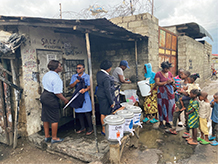
Water point providing oral rehydration solution in a community (Photo: JICA)
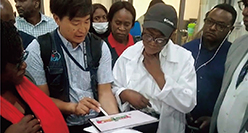
A JICA expert explaining the layout of the cholera treatment center to the Zambian Minister of Health during an inspection visit (Photo: JICA)
Glossary
- Tokyo International Conference on African Development (TICAD)
- An international summit-level conference on African development launched by Japan in 1993, TICAD embodies the principles of African “ownership” and international “partnership.” In August 2022, TICAD 8 was held in Tunisia, attended by 48 African countries, including 20 heads of state and government.
- African Business Education Initiative for Youth (ABE Initiative)
- Launched at TICAD V in 2013, this program is designed to foster industrial human resources in Africa. It offers young Africans opportunities to pursue master’s degrees at Japanese universities, participate in internships at Japanese companies, and receive Japanese language and business skills training, among other business programs. Since 2016, the program has also provided training for future on-site leaders through the Association for Overseas Technical Cooperation and Sustainable Partnerships (AOTS).
- New Approach for Peace and Stability in Africa (NAPSA)
- Proposed by Japan at TICAD 7 in Yokohama in August 2019, this initiative is based on the principles of respecting Africa’s ownership and addressing the root causes of conflict and terrorism. Under NAPSA, Japan supports: (1) African-led efforts for conflict prevention, mediation, and resolution by the AU and regional economic communities (RECs); and (2) institution building, strengthening governance, preventing youth radicalization, and enhancing resilience at the community level. At TICAD 8 in August 2022, Japan reaffirmed its commitment to supporting Africa’s own efforts under NAPSA to achieve peace and stability, which are prerequisites for economic growth, investment, and better livelihoods.
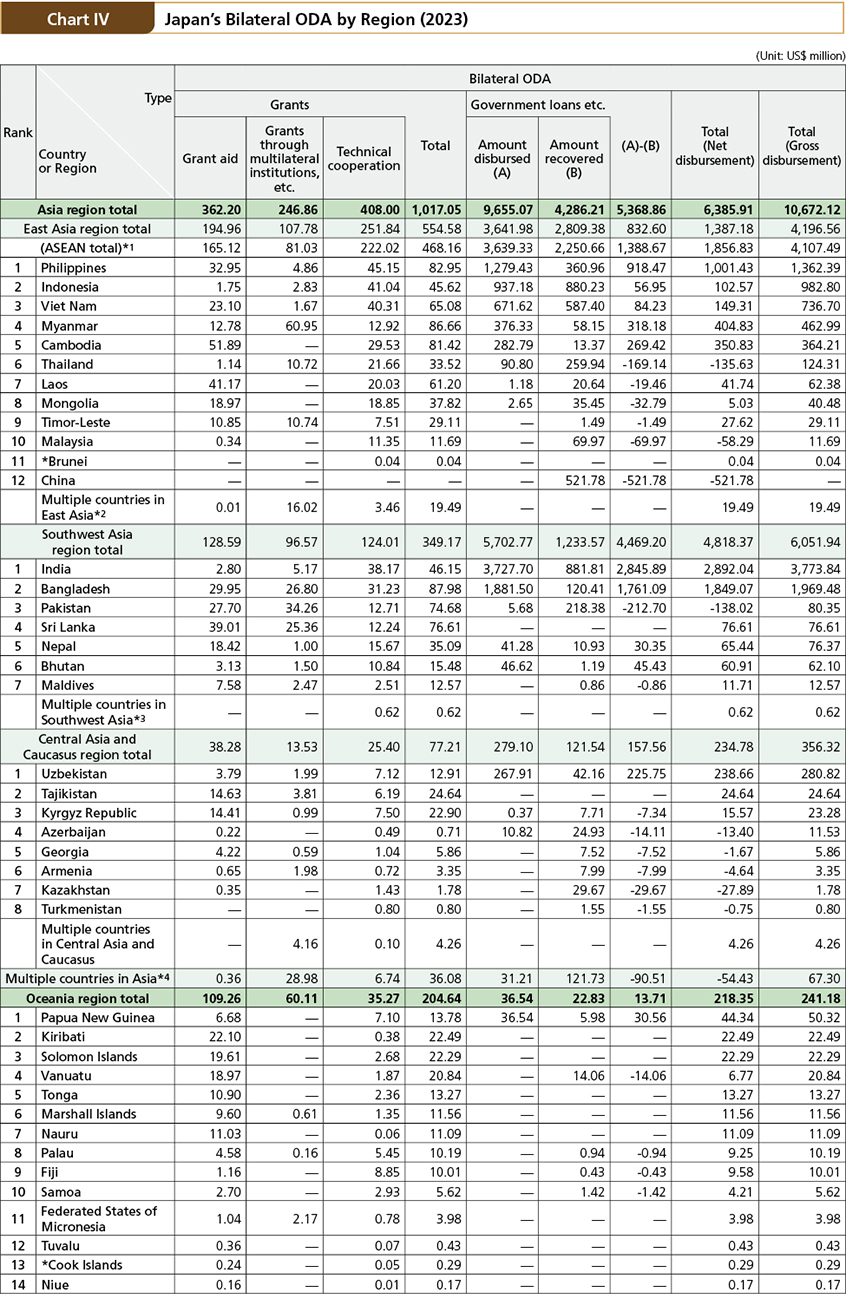
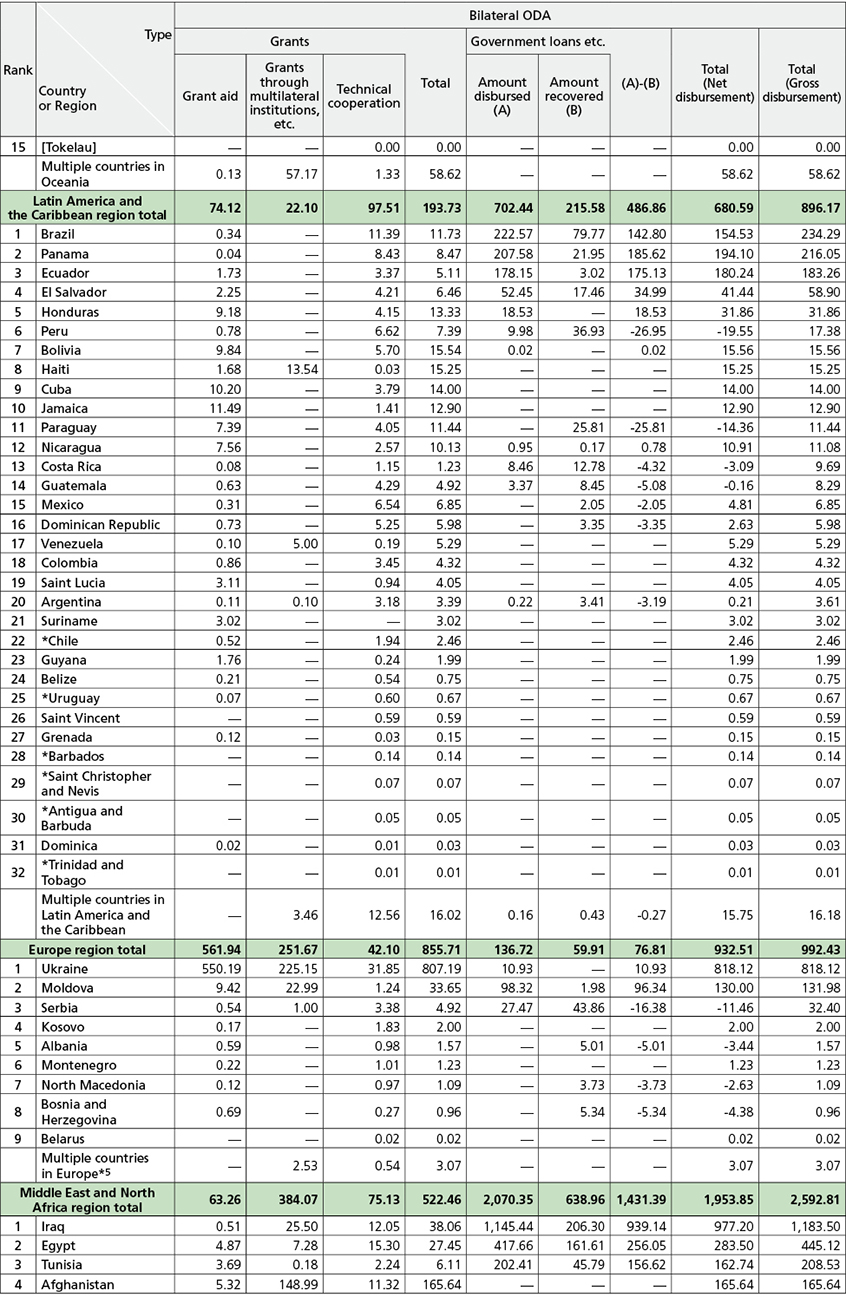
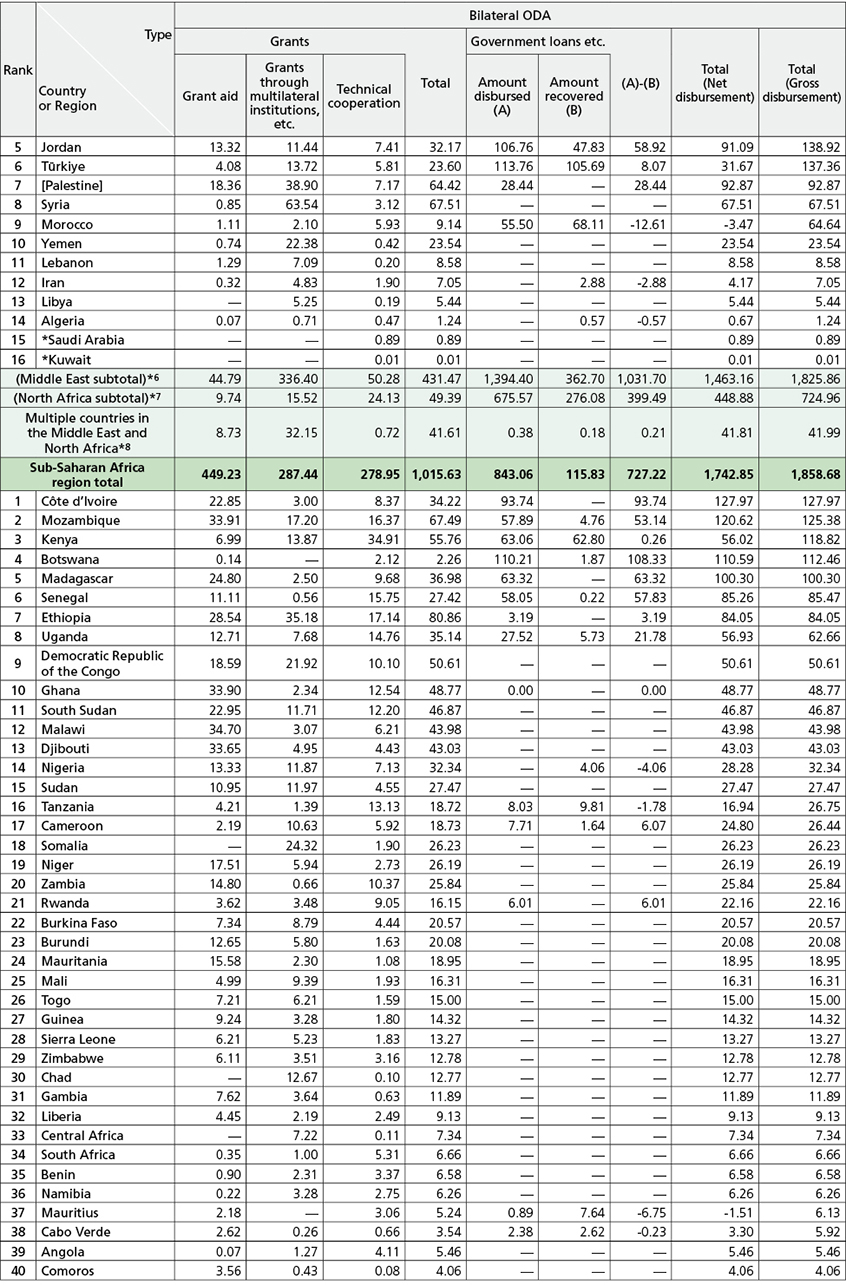
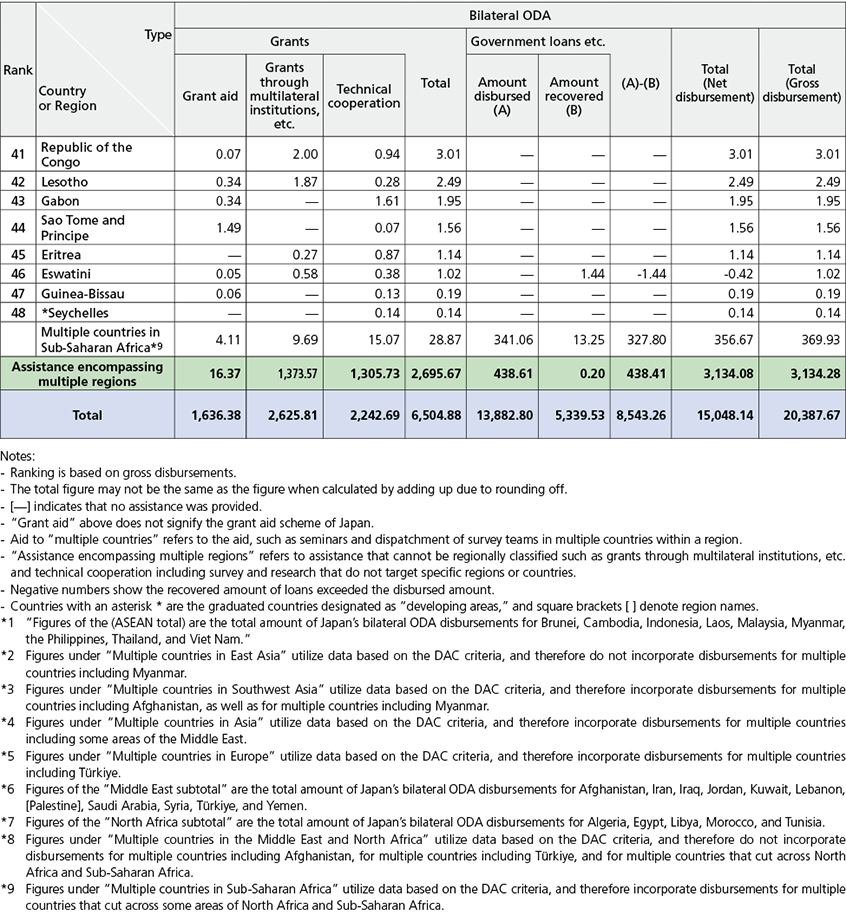
- Note 30: Adopted at the Ordinary Session of the Assembly of the African Union (AU) in 2015, the same year the “2030 Agenda for Sustainable Development” was endorsed.
- Note 31: See Note 93.
- Note 32: See Part III, Section 1 (3).
- Note 33: Three areas covering the East Africa Northern Corridor, the Nacala Corridor, and the West Africa Growth Ring.
- Note 34: See Note 15.
- Note 35: Benin, the Democratic Republic of the Congo, the Republic of Congo, Malawi, South Sudan, Tunisia, and Uganda.
- Note 36: See Note 66.
- Note 37: See Note 86.
- Note 38: See Note 87.
- Note 39: See the glossary.
- Note 40: A border area of Burkina Faso, Mali, and Niger, which is frequently affected by terrorist attacks.