
Part III Responses to Priority Challenges
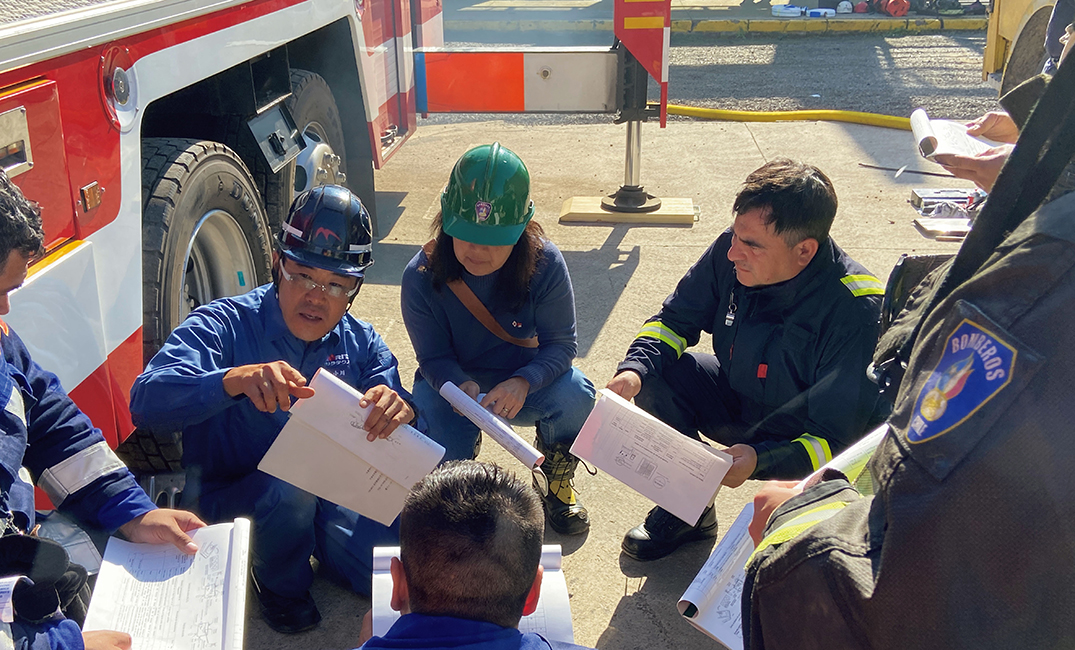
A Japanese technical expert providing guidance on ladder truck maintenance as part of the Grant Assistance for Grass-Roots Human Security Projects, “The Project for providing a Ladder Truck for Firefighters of Talagante” in Chile (Photo: The Society for Promotion of Japanese Diplomacy)
1 “Quality Growth” in the New Era and Poverty Eradication through such Growth
(1) Strengthening Socio-economic Autonomy and Resilience
Japan has long sought to eradicate poverty, the most fundamental development challenge, by achieving economic growth and ensuring that such growth is “quality growth.”Glossary Essential to “quality growth” is improving the socio-economic infrastructure that underpins development. Moreover, it is crucial for the private sector to play a central role, vigorously promoting its activities in industrial development as well as in the expansion of trade and investment. However, national economies are recovering from the impacts of the COVID-19 pandemic at various paces. Concurrently, the global economy faces challenges, including surging energy and food prices and supply chain disruptions,Note 1 exacerbated by Russia’s aggression against Ukraine and instability in the Middle East. In particular, developing countries often face difficulties in building institutional capacity and an enabling environment needed to promote trade and attract private investment. To support developing countries in building socio-economic autonomy and resilience, engagement from the international community remains vital.
●Japan’s Efforts
■Enhancing Resilience and Diversifying Supply Chains as well as Promoting Economic Diversification
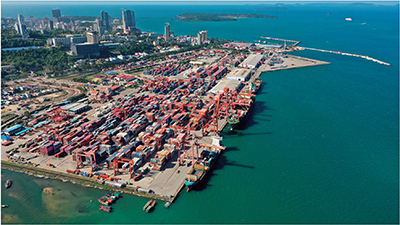
Sihanoukville Port in Cambodia, developed and expanded with support from Japan through yen loans and other assistance (Photo: JICA)
Japan supports the development of trade and investment environments, as well as the broader economic foundations of developing countries, through both structural (infrastructure) and non-structural (institutional and capacity building) assistance, with the aim of enhancing their export capabilities and competitiveness. Structural assistance includes the development of transportation networks—such as ports, roads, and bridges—that are essential for trade, along with industrial infrastructure like power plants and transmission grids. On the non-structural side, support is provided through technical cooperation in trade-related fields, such as capacity building for customs officials and experts in intellectual property rights, to facilitate trade management as well as import and export procedures.
Strengthening the economic resilience and economic security of developing countries through such cooperation is an urgent priority. Doing so helps ensure quality growth in developing countries while also contributing to a virtuous cycle of mutual growth that benefits the Japanese economy.
With this perspective in mind, at the Ministerial Council Meeting of the Organisation for Economic Co-operation and Development (OECD) held in May 2024, under the leadership of Japan as chair, the member countries expressed serious concerns over risks of excessive dependence on certain countries for supply of critical goods and attempts to weaponize economic dependencies, amid the recent pandemic and rising geopolitical tensions. In the Ministerial Council Statement, member countries affirmed their commitment to enhancing cooperation on economic resilience and economic security through inter alia reducing vulnerabilities and countering practices that undermine international rules and norms.
At the G7 Trade Ministers’ Meeting in July of the same year, Japan, in light of addressing economic coercion, stressed the importance of enhancing the G7 members’ own capacity to counter such coercion, including the strengthening of supply chain resilience for critical minerals, and the importance of collaboration beyond the G7. Japan further pointed out the importance of unity among like-minded countries, including the G7 members, in not allowing arbitrary export controls, and the importance of collaboration between the public and private sectors to mitigate the impact of such controls.
As an example of cooperation for infrastructure development aimed at strengthening supply chain resilience, Japan has provided a comprehensive cooperation package since 1999 to develop Cambodia’s sole deep-water port, Sihanoukville Port, located at the junction of the Pacific and Indian Oceans. Through cooperation projects utilizing yen loans, technical cooperation, and grants, Japan has provided a wide range of support—the development and expansion of container terminals, the establishment of a special economic zone adjacent to the port, the enhancement of the port authority’s management and operational capacity, and the digitalization of port procedures—all with the goal of positioning the port as a regional hub. In September 2024, an inauguration ceremony was held for the newly completed container terminal. Japanese companies have also begun operating in the special economic zone, and public-private collaborations continue to advance in areas such as the enhancement of logistical functions.
Japan offers training programs worldwide on strengthening supply chain resilience, building sustainable and reliable logistics systems, and enhancing food value chains.Note 2 In FY2023, a total of 64 government officials and others participated in these programs. In Indonesia, since 2018, Japan has been providing technical cooperation on six remote islands near the national border. In addition to supporting the development of fisheries facilities, this cooperation has focused on revitalizing local economies through the promotion of high-value-added marine products and the establishment of distribution systems to markets outside the islands.
To promote trade with developing countries, Japan has introduced the Generalized System of Preferences (GSP), which applies lower tariff rates than those under the Most-Favored Nation regime to encourage imports from developing countries into the Japanese market. In particular, Japan offers a Special Preferential Tariff Scheme for Least Developed Countries (LDCs),Glossary providing duty-free, quota-free accessGlossary for a wide range of products.
Japan actively promotes Economic Partnership Agreements (EPAs)Glossary and investment agreements with developing countries. These agreements are designed to liberalize trade and investment, such as through the reduction or elimination of tariffs and barriers to trade in services, as well as the simplification of customs procedures. They also aim to protect Japanese companies investing abroad and their assets, thereby improving the overall business environment. Such efforts are expected to support Japanese companies in expanding their activities in developing country markets, ultimately contributing to the economic growth of those countries. For example, in 2024, Japan launched EPA negotiations with Bangladesh and the United Arab Emirates. To ensure the smooth implementation of EPAs, Japan also provides technical assistance to customs authorities in developing countries to support the proper application of customs procedures.
Discussions regarding “Aid for Trade (AfT)”Glossary have intensified in various international fora such as the World Trade Organization (WTO) and the OECD, as a means of further promoting support from developed countries, including Japan. Japan has contributed to organizations such as the International Trade Centre (ITC), which implements AfT, with the aim of strengthening the capacity of developing countries to engage in trade negotiations and participate in the global market, and raising their ability to implement the WTO agreements. In 2024, support was extended through the ITC for a range of initiatives: promoting the use of e-commerce among women entrepreneurs in Africa; providing technical assistance to expand vaccine production and distribution in Nigeria; enhancing the capacity of governments, business support organizations (such as trade promotion agencies and chambers of commerce), and micro-, small, and medium-sized enterprises (MSMEs) in Nigeria and other West African countries; and facilitating employment and entrepreneurship for displaced persons in Ukraine.
With regard to customs-related cooperation, Japan actively supports developing countries, particularly among ASEAN member states, through organizing training programs for customs officials and dispatching Japanese customs personnel as experts, in order to share technical expertise and experience. These efforts are aimed at strengthening the institutional capacity of customs authorities in developing countries. In particular, Japan has dispatched its customs officials as long-term JICA experts to six ASEAN member states,Note 3 where they provide on-site support tailored to the specific needs of each country. Since July 2024, a regional initiative involving Cambodia, Thailand, and Laos has also been launched to enhance connectivity in the Mekong region. At the multilateral level, Japan contributes to the World Customs Organization (WCO), helping to promote the adoption of international standards and to share best practices, thereby facilitating global trade while ensuring border security. In addition, the Master Trainer Programme—launched in 2016 as a joint initiative by JICA and the WCO—was initially developed for Africa and has since expanded to Pacific Island countries as well as Central Asia and the Caucasus region. As of 2024, the program supports the training of instructors and development of training materials in 37 countries, contributing to the enhancement of sustainable customs training capabilities.
■Providing Technical Assistance for the Development of Financial and Capital Market Systems and Related Areas
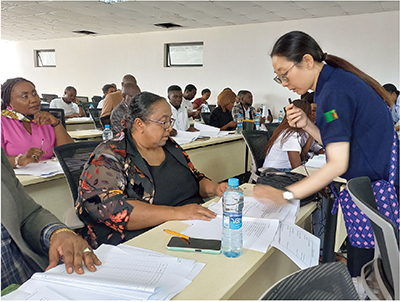
A JOCV in Zambia conducting an accounting workshop for members of regional chambers of commerce and businesspersons of small and medium enterprises on proper financial record-keeping for securing bank loans (Photo: JICA)
A sound and stable financial system, along with a well-functioning financial and capital market, is essential to the sustainable economic development of developing countries. As financial globalization progresses, it is increasingly important to support the development of robust financial markets by fostering financial systems in emerging markets in an appropriate manner. With this in mind, Japan has provided training through the JICA Knowledge Co-Creation Program, covering topics such as financial regulations and supervision, as well as the development of the stock market. Additionally, the Financial Services Agency of Japan hosted the Asia High-Level Financial Regulator’s Forum, bringing together financial regulatory authorities from across the region to exchange views and strengthen cooperation on shared financial challenges in Asia. The first meeting, held in March 2024, focused on natural disaster protection gaps and transition finance in Asia, with 37 participants from six countries. The second meeting, held in October 2024, explored the role of regulatory authorities in enhancing the sustainability and resilience of the financial sector and continued discussions on transition finance, with participation of 51 representatives across nine countries.
■Supporting Domestic Resource Mobilization
In order for developing countries to achieve quality growth by addressing various development challenges under their own ownership, it is important that they secure necessary development funds through their own efforts, such as from tax revenue. This approach is known as “domestic resource mobilization,” and its importance has been increasingly emphasized in light of the shortfall in development financing required to achieve the Sustainable Development Goals (SDGs).Glossary Japan, in collaboration with international organizations and other partners, contributes to discussions on domestic resource mobilization and provides related support to developing countries. For example, Japan actively engages in technical cooperation aiming at improving tax administration of developing countries. In 2024, officials from the National Tax Agency (NTA) served as JICA’s long-term experts in Laos, the Philippines, and Viet Nam, providing expertise in areas such as taxpayer management, international taxation, and tax collection. Additionally, the NTA organizes the International Seminar on Taxation (ISTAX) and training on international taxation for tax officials from developing countries. Moreover, the “Project for Enhancement of Property Valuation Capacity” has been underway in Thailand since November 2022. Japan also supports the technical assistance programs of the International Monetary Fund (IMF) and the Asian Development Bank (ADB) related to taxation, including domestic resource mobilization, by providing human resources, expertise, and financial assistance.
To support the sustainable development of developing countries, the implementation of the OECD/G20 BEPS Project,Glossary which aims to prevent tax avoidance by multinational enterprises, is also important. Coordinated implementation of this project by participating countries enables developing countries to effectively tackle tax avoidance and to impose and collect taxes appropriately within their jurisdictions. It also helps align their tax systems and administration with international standards, contributing to the establishment of a stable, predictable, and attractive investment environment for companies and investors. Currently, approximately 145 jurisdictions, including many developing countries, participate in the OECD/G20 Inclusive Framework on BEPS—a framework established to implement the measures agreed under the BEPS Project. To address the tax challenges arising from globalization and digitalization of the economy, work is underway on implementing the Two-Pillar Solution,Glossary agreed upon in 2021. This includes negotiations on a multilateral convention for Pillar One and advancing legislative reforms in individual jurisdictions for Pillar Two. Japan supports developing countries in implementing the Two-Pillar Solution through contributions to relevant international organizations.
■Supporting the Labor Sector, including through Industrial Human Resources Development and Job Creation
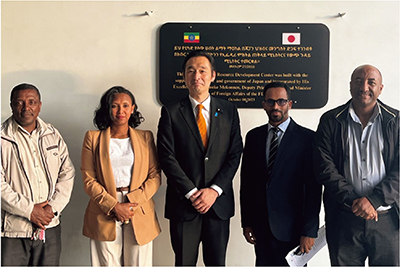
Then Parliamentary Vice-Minister for Foreign Affairs Fukazawa visiting the TICAD Human Resource Development Center for Business and Industry in Ethiopia, a core institution for developing human resources through Kaizen, built with Japan’s grant, in February 2024
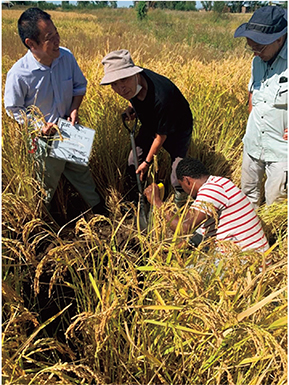
Ethiopian researchers and JICA experts conducting a rice root distribution survey in a trial plot as part of technical cooperation, “Project for Capacity Development to Transfer the Technology for Increasing Rice Production” in Ethiopia (Photo: JICA)
Developing a skilled industrial workforce is crucial for achieving quality growth. In developing countries, where opportunities for education and training are often limited, Japan supports core institutions such as technical colleges and vocational training centers in cultivating personnel with a wide range of technical skills and expertise. In doing so, Japan works in partnership with the private sector, leveraging its knowledge and experience to strengthen the capacity of teachers and instructors, improve the organizational management of training facilities, and assist in the development and revision of curricula and teaching materials, all of which are efforts that aim to better link education with employment.
From 2016 to 2024, Japan provided multifaceted support, including the development of facilities and provision of equipment, to 19 Technical and Vocational Education and Training (TVET) institutions and others through 21 projects in 15 countries, in collaboration with the industrial sector and other partners. In 2024, Japan also supported skills development aimed at improving women’s livelihoods through 13 projects across 20 countries and regions.
For Asia, the Japan-ASEAN Comprehensive Connectivity Initiative, announced in September 2023, set out Japan’s plan to provide training opportunities for 5,000 individuals in the following three years. Through various programs—such as training courses of JICA Knowledge Co-Creation Program (Group & Region Focus) and the Project for Human Resource Development Scholarship (JDS)—Japan supports the development of human resources, which is key to nation-building of ASEAN member states.
The “Innovative Asia” initiative, launched in FY2017, offers opportunities for outstanding science and engineering students from developing countries in Asia to study and participate in internships in Japan, including at companies, with the view to promoting circulation of highly-skilled professionals between Japan and other Asian countries.
The Ministry of Health, Labour and Welfare (MHLW) has been conducting training programs both in Japan and in four targeted countries—Cambodia, Indonesia, Laos, and Viet Nam—to help develop and secure a skilled workforce. These programsNote 4 aim to transfer the know-how of Japan’s Skills Evaluation System, which has been developed over time in both the public and the private sectors, including the National Skill Test System and Skills Competitions. In FY2023, a total of 100 individuals from four countries participated in the training. These efforts are expected to support the development and improvement of local skills evaluation systems, foster the growth of skilled workers, expand employment opportunities, and elevate the social standing of skilled labor in the target countries.
For Africa, Japan supports workforce development in the industrial sector to promote sustainable growth at the individual level. Key initiatives include the ABE Initiative (African Business Education Initiative for Youth)Note 5 and the Africa KaizenNote 6 Initiative, both of which foster collaboration among industry, academia, and government. Japan also provides technical assistance in partnership with international organizations (For details on the ABE Initiative, see Part IV, Section 8 and Part V, Section 1 (6)).
Japan is also active in supporting labor-related initiatives. Socio-economic downturns tend to disproportionately affect socially vulnerable people, including youth and women. In order to foster stable employment, it is essential for countries to build social safety nets that can mitigate such risks. At the same time, there is a strong international call for efforts to promote decent work for all, as set out in Goal 8 of the Sustainable Development Goals (SDGs). Japan contributes to the realization of decent work in various regions around the world such as Africa, the Middle East, and Asia through cooperation that includes job creation for youth and women, improvement of occupational safety and health standards, and support for the development of social insurance systems, by funding the projects of the International Labour Organization (ILO) and other organizations.
Featured Project 1
Iraq


Reconciliation and Reintegration through a Community-Based Approach in Iraq
Contributions to International Organizations (April 2021 – September 2022)
Supporting the Livelihood Recovery of Female Returnees in Partnership with Local Businesses
In 2014, the invasion by the Islamic extremist group “Islamic State of Iraq and the Levant (ISIL)” forced more than six million people—15% of Iraq’s population—to flee their homes, leaving them homeless and displaced, and their local communities devastated. Even today, nearly one million people continue to live as internally displaced persons (IDPs), and they face many challenges in returning to their home communities. The challenges include securing housing, restoring infrastructure, access to education and vocational training, as well as psychological support for trauma caused by ISIL’s brutal acts.
Japan has been actively providing humanitarian assistance through the United Nations Development Programme (UNDP) in northwestern Iraq, which was affected by the ISIL invasion, with a focus on Cash-for-WorkNote 1 programs, vocational training, support for entrepreneurship, and housing rehabilitation.
As one form of support, Technostar Ltd., a local company representing Japan’s Brother Int. Ltd, offered to donate 100 Brother-brand sewing machines. Facilitated by the Embassy of Japan and UNDP, the company donated these sewing machines to women who participated in vocational training in Anbar Province, an area that Japan supports through UNDP.
One woman who received a sewing machine shared her thoughts, “When I returned to my home, there was nothing left. It is extremely difficult to make a living, especially for families who lost the head of their household and for women. I am also a woman who lost her husband and has no job, but with the sewing skills I have acquired and the sewing machine I was given, I want to start my own small business.”
Through the combined efforts of Japan’s humanitarian assistance and a local Iraqi company, vulnerable women in Iraq are receiving protection and livelihood support. Japan remains committed to supporting the protection of IDPs and helping returnees rebuild their lives through various ways.
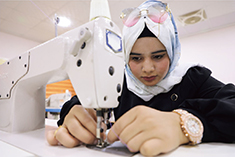
A woman, who was once internally displaced, returning to Anbar Province and receiving sewing training (Photo: UNDP Iraq Office)
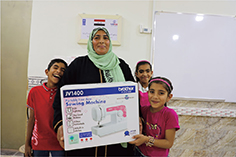
A woman and children receiving a Japanese brand Brother sewing machine (Photo: UNDP Iraq Office)
Note 1 A method of supporting self-reliance by temporarily employing disaster victims or refugees and paying them for their labor in the event of natural disasters or humanitarian crises.
■Securing Access to Resources and Energy
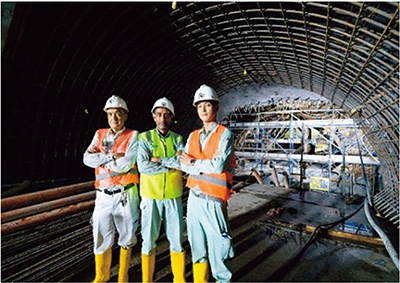
A headrace tunnel constructed through loan aid “Asahan No. 3 Hydroelectric Power Plant Construction Project” for Indonesia (Photo: Otto Ferdinand)
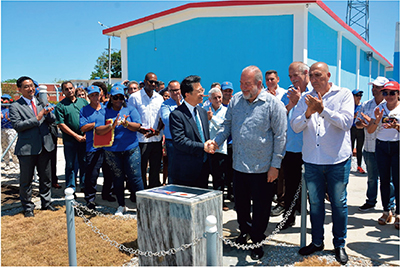
Prime Minister Marrero of Cuba and Mr. Hirata, then Ambassador of Japan to Cuba, shaking hands in front of the commemorative plaque installed at the power plant during the completion ceremony for the grant-financed “Project for the Improvement of Power Supply in the Isle of Youth” for Cuba
As of 2022, 685 million people worldwide are estimated to lack access to electricity.Note 7 The absence of reliable energy sources, such as electricity and gas, hampers industrial development, reduces employment opportunities, and exacerbates poverty. Global energy demand is expected to grow further, particularly in emerging and developing countries, including those in Asia. At the same time, addressing climate change is an urgent challenge. In this context, it is essential to ensure energy security, while advancing decarbonization efforts to achieve net zero emissions by 2050. This requires diversifying both energy sources and suppliers. Japan remains committed to supporting energy transitions in ways that are tailored to the specific conditions and development needs of each region. In October 2024, during the Japan-Laos Summit Meeting held alongside the ASEAN-related Summit Meetings, Japan expressed its intention to cooperate with Laos to promote assistance for strengthening electricity connectivity with neighboring countries and promoting decarbonization through clean energy in Laos, including consideration for the Co-creation for common agenda initiative. On the same day, at the 2nd Asia Zero-Emission Community (AZEC) Leaders Meeting, then Prime Minister Ishiba also stated Japan’s interest in proactively developing projects under the Co-creation for common agenda initiative, to support Lao PDR’s bid to become a regional clean energy hub in the future, with a view to contributing to the decarbonization in the region.
To promote sustainable development in developing countries, Japan offers support to enable the provision of modern energy and works to ensure a stable electricity supply for industrial growth. This includes assistance for the development of environmentally friendly infrastructure, such as energy-efficient equipment and power generation facilities that utilize renewable energy sources, including hydropower, solar photovoltaics, solar thermal, wind, and geothermal energy (For more on Japan’s climate change efforts, see Part III, Section 3 (1)).
In the Pacific Islands region, characterized by its extensive maritime territories and high vulnerability to the impacts of climate change, Japan supports the mainstreaming of grid-connected renewable energy, with a focus on energy security and the transition to a low- and zero-carbon society. In the Dominican Republic, where electricity supply depends heavily on imported fossil fuels, Japan is helping to improve energy efficiency through a yen loan project that supports the nationwide conversion of street lighting on public roads to LED. These efforts are expected to contribute to promoting energy conservation in the country’s public sector and reducing greenhouse gas emissions in the country’s public sector.
At the Eighth Tokyo International Conference on African Development (TICAD 8),Note 8 held in August 2022, Japan launched the “Green Growth Initiative with Africa (GGA)” to maximize its contributions through three approaches, namely ownership and co-creation, flexible mobilization of finance, and collaboration with diverse partners. Under this initiative, Japan announced support for private investment in renewable energy projects, the expansion of geothermal power generation, and cooperation in the mineral resources sector, particularly in copper and rare metals that are essential for advancing a decarbonized society. To help African countries sustainably manage and utilize their natural resources and ecosystems while pursuing sustainable growth (green growth), Japan also supports the development of regional power infrastructure, such as the Africa Power Pool (a cross-border power transmission network), distribution systems, and grid stabilization measures.
■Promoting Initiatives to Enhance Food Security and Nutrition
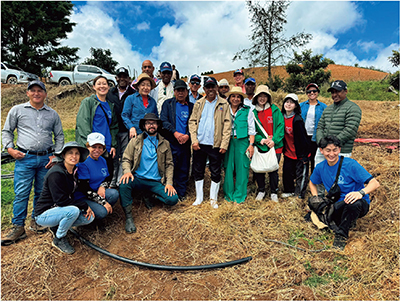
JICA experts, JOCVs, and local farmers working together in the Dominican Republic under the JICA Partnership Program. Various specialists, such as breeding researchers, university professors, and orchard owners, from Matsudo City in Chiba Prefecture—a major pear-producing region—are collaborating to promote Japanese pears as a regional specialty product in the La Culata district. (Photo: JICA)
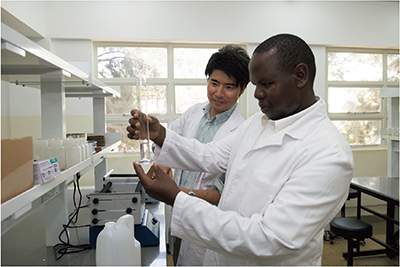
A JICA expert providing research guidance at Jomo Kenyatta University of Agriculture and Technology in Kenya, where Japan has been providing continuous support for over 40 years since the university’s establishment (Photo: JICA)
According to the report, “the State of Food Security and Nutrition in the World 2024,”Note 9 an estimated 713 to 753 million people were facing hunger in 2023. The report also projects that approximately 600 million people will still be affected by hunger in 2030. In addition, the prolongation of Russia’s aggression against Ukraine has left an estimated 5 million people—about 15% of the population—in need of food assistance.Note 10 Following the terrorist attacks by Hamas and others in October 2023, the number of people suffering from acute food insecurity in the Gaza Strip has risen to 2.2 million.Note 11
Amid the urgent need to accelerate international efforts to combat hunger and poverty, Japan has been actively demonstrating its commitment to addressing these challenges in coordination with the international community through various bilateral meetings and multilateral conferences. In July 2024, at the “Ministerial Meeting of the G20 Task Force to Establish a Global Alliance against Hunger and Poverty” held in Brazil, Japan expressed its support for the creation of the Alliance, as an initiative in line with Japan’s development cooperation philosophy of supporting developing countries’ self-help efforts, while “co-creating” solutions to social issues in collaboration with diverse stakeholders. At Session 1 of the G20 Rio de Janeiro Summit in November, “Fight against Hunger and Poverty,” Japan formally announced its participation in the Alliance. Then Prime Minister Ishiba shared Japan’s experience of transforming a barren land into the world’s largest soybean-producing region through long-standing support for the development of the Cerrado region in Brazil.Note 12 He emphasized that Japan would further cooperate in the realization of sustainable agriculture, which converts degraded pastures into farmland without deforestation. He also stated that Japan also focuses on building the capacity of small-scale farmers, and expands the same support to 69 countries around the world, mainly in Africa and Central and South America, with the aim of improving farming and cultivation skills focused on increasing sales. Furthermore, then Prime Minister Ishiba affirmed Japan’s support to expand sustainable and highly productive agriculture, forestry and fisheries, including the reduction of greenhouse gas emissions, to new partners, making use of Japan’s advanced technologies.
Japan provides food aidNote 13 in response to requests from developing countries facing food shortages. In FY2024, grants totaling ¥6.15 billion were extended to 21 countries and regions, mainly through the provision of Japan’s Government-owned Rice.
In addition to its bilateral cooperation through JICA, Japan works with international organizations to provide food assistance to developing countries. Through the World Food Programme (WFP), for instance, Japan supports school meal programs that promote access to education, as well as initiatives that encourage participation in agricultural and social infrastructure development through food distribution. In August 2024, Japan decided to provide ¥500 million in grants for South Sudan through WFP, where the food crisis had worsened due to flooding and other challenges. In 2023, WFP reached around 152 million people in over 120 countries and regions, providing food assistance including through the distribution of approximately 3.7 million tons of food and cash-based interventions. Japan’s total disbursement to WFP in 2023 amounted to approximately $208.97 million.
Japan supports nutrition improvement in developing countries through contributions to multilateral development banks (MDBs)Glossary and other mechanisms. For example, it helps effective finance mobilization for maternal and child health as well as the nutrition sector, the World Bank’s Global Financing Facility (GFF),Glossary and supports policy development to improve nutrition through the Trust Fund for Scaling Up Nutrition.Glossary In order to mainstream nutrition in development policy, Japan hosted the final meeting of the 20th replenishment of the International Development Association (IDA) of the World Bank Group in December 2021, where it identified human capital development—including nutrition—as a key priority. That same month, Japan hosted the “Tokyo Nutrition for Growth Summit 2021,” where then Prime Minister Kishida announced over ¥300 billion in nutrition-related assistance over three years. In 2023, it committed approximately ¥156.2 billion in nutrition assistance.
Furthermore, Japan places strong emphasis on agriculture, which plays a key role in Africa’s economic growth, and actively contributes to its development. Under Phase 2 of the Coalition for African Rice Development (CARD)Glossary and through the RICE approach,Glossary Japan supports a range of efforts to improve both the quantity and quality of rice production. These efforts include developing irrigation facilities, breeding and disseminating high-yield rice varieties such as the New Rice for Africa (NERICA),Glossary a hybrid of Asian and African rice, and promoting improved cultivation techniques. The number of countries covered by CARD has so far expanded to 32. At TICAD 8 held in August 2022, Japan announced its commitment to training 150,000 people through CARD and set a goal to double rice production across the continent to 56 million tons by 2030, an effort already underway in countries including Uganda.
To support the transition from subsistence farming to agriculture as a source of income, Japan has been promoting the Smallholder Horticulture Empowerment & Promotion (SHEP) approach.Glossary SHEP encourages smallholder farmers engaged in the production of fruits and vegetables to adopt a market-oriented mindset—“grow to sell”—and seeks to improve their farm management and cultivation techniques in order to increase their income. Originating from technical cooperation with Kenya, the SHEP approach has spread to around 60 countries worldwide, supporting this transformation through training programs and the dispatch of experts. At TICAD 8, Japan made the commitment to support 66,000 farmers in making the transition to income-generating agriculture through SHEP. It also pledged to strengthen food production by co-financing the African Emergency Food Production Facility of the African Development Bank. In 2024, Japan provided a total of USD 320 million in assistance to Côte d’Ivoire, Tanzania, and Nigeria.
To contribute to improving food security by enhancing transparency in international agricultural markets, Japan has supported the “Agricultural Market Information System (AMIS)”Note 14 through data provision and financial contributions. At the G7 Hiroshima Summit in May 2023, leaders reaffirmed their commitment to strengthening support for AMIS.
Japan contributes to strengthening food production systems in developing countries through agricultural support in collaboration with international organizations such as the Food and Agriculture Organization of the United Nations (FAO), the International Fund for Agricultural Development (IFAD), the Consultative Group on International Agricultural Research (CGIAR), and the World Food Programme (WFP). For example, through its partnership with FAO, Japan engages in technical cooperation for agricultural and rural development, helps establish international standards and norms in the food and agriculture sectors, and assists in developing statistical systems. Japan supports research and development aimed at achieving both productivity potential and sustainability, including the development of improved crop varieties and the introduction of digital agricultural technologies, in collaboration with CGIAR, which consists of 15 international agricultural research institutions. At the G7 Agriculture Ministers’ Meeting in Miyazaki in April 2023, Japan launched the “Enhanced Linkages between Private sector and Small-scale Producers (ELPS)” initiative. This initiative connects Japanese companies with smallholder farmers and other stakeholders in developing countries to help build and strengthen stable and sustainable supply chains for imported agricultural products. Under this framework, the first ELPS project—the “Sustainable Coffee Production Project” in Tanzania—was launched in September 2024. By providing support to raise awareness on environmental sustainability and to enhance both productivity and quality of produce, the project aims to improve the livelihoods of small-scale coffee farmers, while also ensuring a reliable supply of coffee beans for private companies sourcing from Tanzania.
In addition to such agricultural assistance, Japan also contributes to improving animal health through collaboration with the World Organisation for Animal Health (WOAH) and FAO. For instance, under the “Global Framework for the Progressive Control of Transboundary Animal Diseases (GF-TADs),”—a joint initiative by WOAH and FAO to address transboundary animal diseases such as Avian Influenza, Foot-and-Mouth Disease (FMD), and African Swine Fever (ASF)—Japan supports efforts by international organizations in the field of animal health, with a particular focus on the Asia-Pacific region.
Glossary
- Quality growth
- Growth that is “inclusive” in that the fruits of growth are shared within society as a whole, leaving no one behind, “sustainable” in that the economy, society, and environment are in harmony across generations, and “resilient” in that it can withstand and recover from various shocks, including natural disasters and economic crises (Development Cooperation Charter).
- Least Developed Countries (LDCs)
- According to the United Nations classification based on income levels, LDCs are those that are significantly behind other developing countries in terms of development. To be classified as an LDC, a country has to meet specific criteria, including having a gross national income (GNI) per capita of $1,088 or less on average over three years. As of 2024, 44 countries meet these criteria: 7 in Asia, 3 in Oceania, 1 in Latin America and the Caribbean, 1 in the Middle East, and 32 in Africa.
- Duty-free, quota-free access
- A measure that allows products imported from LDCs to be brought into Japan duty-free and without quantitative restrictions. Japan has expanded the scope of this measure, and currently allows approximately 98% of all tariff lines to be imported under duty-free, quota-free conditions.
- Economic Partnership Agreement (EPA)
- Agreements between specific countries or regions with the objective of strengthening broad economic relations, which incorporates elements of Free Trade Agreements (FTAs), aiming to reduce or eliminate tariffs on goods, barriers to trade in services, etc., as well as rule-making in fields of investment, movement of natural persons, intellectual property protection and competition policy, and elements of cooperation in various fields. These agreements are expected to stimulate trade and investment, contributing to further economic growth.
- Aid for Trade (AfT)
- Assistance provided to developing countries in order to enhance their trade-related capabilities and develop infrastructure, with the aim of achieving economic growth and poverty reduction through trade under the multilateral trading system of the World Trade Organization (WTO). The WTO places particular emphasis on promoting development in developing countries by facilitating their integration into the multilateral free trading system.
- 2030 Agenda for Sustainable Development (2030 Agenda)/Sustainable Development Goals (SDGs)
- International goals aimed at realizing a sustainable and better world by 2030, as outlined in “the 2030 Agenda for Sustainable Development,” adopted unanimously by UN member states at the UN Summit in September 2015, as the successor to the Millennium Development Goals (MDGs, 2001). The SDGs consist of 17 goals and 169 targets.
- OECD/G20 BEPS Project
- Launched in June 2012 by the OECD Committee on Fiscal Affairs, the OECD/G20 Base Erosion and Profit Shifting (BEPS) Project aims to revise the entire framework of international taxation rules to better reflect the realities of the global economy and corporate behavior, so as to prevent multinational enterprises from artificially shifting profits and eroding tax bases to avoid taxation, based on the notion of ensuring a level playing field. It also aims to enhance the transparency of both governments and multinational enterprises.
- Two-Pillar Solution
- Under the conventional international tax system, a country may not impose taxes on services provided across borders, unless the service provider is physically present within its territory, such as possessing a local office or server in the country. However, as the economy becomes increasingly digitalized, a challenge has emerged: market countries are unable to impose tax on profits derived from services delivered online to their consumers, when the service provider has no physical presence in their jurisdiction. To address this gap, some market countries have unilaterally introduced Digital Services Taxes (DSTs), targeting companies engaged in specific digital activities such as online advertising to prevent tax avoidance. However, since these measures are taken at the discretion of each country, they risk undermining the stability of the international tax system. The Two-Pillar Solution is an international reform effort designed to respond to these challenges. Pillar One aims to eliminate unilateral measures such as DSTs and allow market countries to tax a portion of the profits of large, highly profitable multinational enterprises, regardless of whether they have physical presence in their jurisdiction, including through the revision of international tax rules. Pillar Two seeks to curb harmful tax competition, which consists of excessively lowering corporate tax rates to attract foreign investment, including through the introduction of a global minimum tax.
- Multilateral Development Banks (MDBs)
- A general term for international institutions that provide comprehensive support for poverty reduction and sustainable economic and social development in developing countries through financial assistance, technical assistance, and knowledge sharing. The term “MDBs” typically refers to the World Bank Group, which operates globally, and four regional development finance institutions that focus on specific regions: the Asian Development Bank (ADB), the Inter-American Development Bank (IDB), the African Development Bank (AfDB), and the European Bank for Reconstruction and Development (EBRD).
- Global Financing Facility (GFF)
- An initiative launched in 2015 by the World Bank, the UN, and others, seeking to expand financial resources for maternal and child health. It provides technical assistance for formulating relevant policies, including those aimed at improving the nutritional status of women and children, as well as for strengthening implementation capacity. To mobilize additional funding, GFF support is conditioned on the use of concessional financing, such as low-interest loans from the World Bank, for implementing the formulated plans.
- Trust Fund for Scaling Up Nutrition
- Established in 2009, this trust fund aims to expand investments in nutrition measures in countries facing a high burden of undernutrition and to strengthen local capacities for implementing effective nutrition programs. It provides technical assistance for the development of nutrition-related policies and enhancement of implementation capabilities, thereby encouraging increased investment in nutrition by both the government and institutions such as the World Bank.
- Coalition for African Rice Development (CARD)
- An initiative to support self-help efforts to boost rice production in Africa, simultaneously functioning as a donor consultation group that works in partnership with interested rice-producing countries. Japan, in partnership with the international NGO Alliance for a Green Revolution in Africa (AGRA), launched CARD at TICAD IV in 2008. The second phase of CARD was initiated at TICAD 7 in 2019.
- Resilience, Industrialization, Competitiveness, Empowerment (RICE) Approach
- An approach adopted under CARD Phase 2 to help achieve the goal of doubling rice production in Sub-Saharan Africa. It focuses on stabilizing production in response to climate change and population growth, fostering local industries in collaboration with the private sector, improving the quality of domestically produced rice to enhance competitiveness with imports, and strengthening agricultural management systems to enhance farmers’ incomes and livelihoods.
- New Rice for Africa (NERICA)
- A collective term for rice varieties developed by the Africa Rice Center, part of the Consultative Group on International Agricultural Research (CGIAR), through crossbreeding high-yield Asian rice with African rice varieties, known for their resistance to weeds, diseases, and pests. Compared to conventional rice, NERICA varieties offer (1) higher yields, (2) shorter growing period, allowing cultivation during short rainy seasons and reducing risk of drought, and (3) greater resilience against drought and disease, making them well-suited to Africa’s hot, dry climate. Since 1996, Japan has supported the development and dissemination of NERICA by dispatching researchers and experts from the Japan International Research Center for Agricultural Sciences (JIRCAS) and JICA.
- Smallholder Horticulture Empowerment & Promotion (SHEP) approach
- Launched by Japan in Kenya in 2006, the SHEP approach supports smallholder farmers who produce vegetables, fruits, and other horticultural crops. It aims to boost farmers’ incomes by encouraging a shift in mindset from “grow and sell” to “grow to sell,” while enhancing their farm management and cultivation skills. The SHEP approach has since been adopted in countries around the world, particularly across Africa.
- Note 1: This refers to the entire process, from procuring raw materials to production, processing, distribution, and sales to providing the product to consumers.
- Note 2: Systems that link added value across all stages of the food production process—from farming to processing, distribution, and consumption—through the coordinated involvement of multiple stakeholders, including farmers; suppliers of inputs such as seeds, fertilizers, and machinery; agri-food processors; transport and logistics providers; and retailers.
- Note 3: The six countries are: Cambodia, Laos, Malaysia, Myanmar, the Philippines, and Thailand.
- Note 4: Training programs include “Training for personnel responsible for developing test standards and questions,” and “Training for personnel involved in administering and grading tests.” The number of participants mentioned above reflects the total across all such training programs.
- Note 5: See the glossary.
- Note 6: An approach that encourages each worker on the production floor to take initiative in identifying and implementing ways to reduce inefficiency and improve quality and productivity. This method was developed in Japan’s manufacturing sector during the post-World War II period of rapid economic growth in order to improve the quality and productivity of manufacturing, rooted in the principles of 5S: Sort, Set, Shine, Standardize, and Sustain.
- Note 7: International Energy Agency (IEA) Tracking SDG7: The Energy Progress Report, 2024 https://www.iea.org/reports/tracking-sdg7-the-energy-progress-report-2024
- Note 8: See the glossary “Tokyo International Conference on African Development (TICAD)”.
- Note 9: A report jointly prepared and published by FAO, IFAD, UNICEF, WFP, and WHO.
https://www.who.int/publications/m/item/the-state-of-food-security-and-nutrition-in-the-world-2024 - Note 10: WFP website: https://www.wfp.org/emergencies/ukraine-emergency#:~:text=A%20total%20of%205%20million%20people%20%2815%20percent,of%20the%20population%29%20need%20food%20and%20livelihood%20assistance
- Note 11: FAO website: https://www.fao.org/newsroom/detail/Fao-hunger-gaza/en#:~:text=Rome%20-%20The%20Food%20and%20Agriculture%20Organization%20of,Integrated%20Food%20Security%20Phase%20Classification%20%28IPC%29%20global%20initiative
- Note 12: A region spanning approximately 204 million hectares in central-western Brazil. The name means “closed” in Portuguese, and the area was originally regarded as unsuitable for agriculture due to its highly acidic soil.
- Note 13: Grants that provide funding for the procurement of necessary goods and services to implement food aid in accordance with the Food Assistance Convention, targeting developing countries undertaking socio-economic development efforts, including poverty reduction.
- Note 14: A system launched by the G20 in 2011 as a response to volatile food prices. AMIS facilitates the timely, accurate, and transparent sharing of agricultural and food market information, such as production volumes and prices, among countries, companies, and international organizations.