
Stories from the Field 02


Saving Lives in Mongolia with Drone Technology
– Building a Drone-Based Blood Delivery Network through Japan-Mongolia Cooperation –
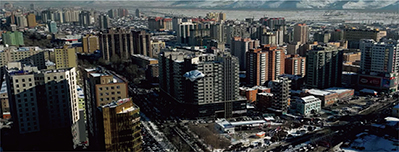
A drone flying over traffic-congested Ulaanbaatar (Photo: Aeronext Inc.)
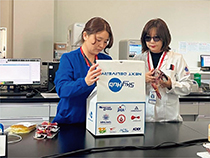
Nurses at the Mongolia-Japan Hospital inspecting blood packages for transfusion delivered by drone (Photo: Aeronext Inc.)
In Ulaanbaatar, Mongolia’s capital and home to nearly half of the country’s total population, social infrastructure has not kept pace with its rapid population expansion and the number of vehicles has also increased dramatically with economic growth. The chronic traffic congestion has seriously disrupted healthcare services, with emergency vehicles and blood deliveries frequently getting stuck in traffic jams. Additionally, in Mongolia, nurses are required to accompany blood deliveries in ambulances, which further limits the time they can dedicate to essential medical services.
Aeronext Inc., a Japanese company developing drone-based logistics services, is working to address these challenges. Focusing on aerial routes as a new form of logistics infrastructure network, the company provides drone delivery services in Japan’s remote mountainous areas and during emergencies such as natural disasters. Since its founding, international expansion is one of their key strategies. As they explored global business opportunities, Aeronext identified Mongolia as a promising market. The company is now utilizing JICA’s SDGs Business Supporting SurveysNote 1 to help build logistics infrastructure for the drone-based delivery of blood for transfusions, a service that demands both speed and qualit
Mr. KAWANOUE Kazufumi, General Manager in charge of overseas business development at Aeronext, explains, “One of the reasons we focused on Mongolia is that it’s a country that is friendly to Japan. For many years, Japan supports Mongolia’s infrastructure development through ODA, helping build hospitals, schools, and airports. Japan also collaborates in sectors such as agriculture and livestock farming, and environmental management, which has contributed to the strong sense of trust of Mongolia toward Japan.”
In June 2023, the company launched a needs assessment survey and began iterative testing of drone operations and cold-weather adaptations, taking into account Mongolia’s harsh winters and strong winds. In November, a successful demonstration flight was conducted, transporting blood over a 9.5 km round-trip between the National Center for Transfusion Medicine (hereinafter referred to as the “Transfusion Center”) and the Mongolia-Japan Hospital, affiliated with the Mongolian National University of Medical Sciences and built with Japanese support (hereinafter referred to as the “Mongolia-Japan Hospital”). Unlike the company’s previous experience in Japan, where drones were primarily deployed in remote areas with limited ground access, this achievement in a densely populated urban setting—where stringent safety standards are required—marked a significant breakthrough.
Mr. Kawanoue highlights the benefits of leveraging JICA’s support, stating, “The demonstration project required the understanding and cooperation of various government agencies, including the Civil Aviation Authority of Mongolia, the National Agency for Meteorology and Environmental Monitoring, and the Administration of Land Affairs, Geodesy and Cartography. As our company had no prior experience in Mongolia, JICA’s introductions were instrumental in helping us establish connections with relevant local authorities, which greatly contributed to the smooth progress of the project.”
In May 2024, Aeronext initiated a pilot project to validate its business model, in partnership with Mongolian companies including NEWCOM Group and MSDD. Together, they worked on developing a business model and establishing a drone operation system, and in June, the company secured Mongolia’s first commercial drone flight license. By August, operations were underway, with regular blood deliveries from the Transfusion Center to three hospitals across the city. The service also supports emergency situations: in September, following an urgent request, blood was delivered in approximately 13 minutes over a 4.75 km route to the Mongolia-Japan Hospital, where a patient with a rare blood type was admitted.
Dr. Adilsaikhan, Director of the Mongolia-Japan Hospital, remarked, “Japanese technology saved the lives of two patients who might not have survived due to traffic congestion. I am fully committed to continue supporting the development and expansion of this drone-based logistics system.” Dr. Erdenebayar, Director of the Transfusion Center, expressed his deep appreciation for the project: “During the COVID-19 pandemic, I attempted to build a drone myself in the hope of realizing aerial transport, but I eventually had to abandon the effort. I am grateful for my encounter with Mr. Kawanoue and for the fact that this project has already helped to save lives.”
Mr. Kawanoue outlined his vision: “Medical professionals’ recognition of the need for drones and their efforts to actively communicate their effectiveness have been a major driving force behind the project’s progress. Looking ahead, we plan to work with the Mongolian University of Science and Technology on joint research to develop next-generation drones tailored to Mongolia’s extreme natural conditions, while also investing in local human resource development. Our goal is to establish a system that can be operated independently by local communities.” As social infrastructure continues to develop in response to local needs, the project is expected to help address issues – not only in Mongolia but also in neighboring countries also struggling with traffic congestion.
Note 1 See the glossary.
<< Previous Page Next Page >>
Main Text | Reference Statistics | Stories from the Field | Master Techniques from Japan to the World | ODA Topics