
Stories from the Field 01Public nomination


Supporting the Prosperous Living in Rural Laos through Coffee Cultivation Technology and Nutrition Guidance
– Initiative through Collaboration among the Government of Japan, International Organizations, and the Private Sector –
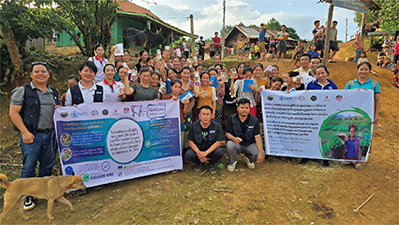
Mr. Tasai (second from left in the front row) with women from the target areas of the nutrition improvement project (Photo: WFP Lao PDR)
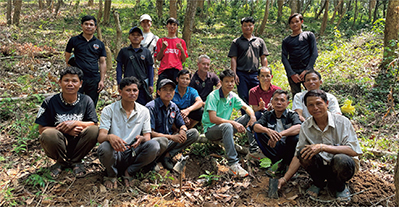
Ms. Miyazaki (third from left in the back row) with villagers from the target area planting coffee seedlings (Photo: Saka no Tochu Co., Ltd.)
Laos has achieved steady economic development in recent years, but income levels remain low. Particularly in rural areas, there are villages where the cash economy is not fully penetrated, making low income a challenge. Against this backdrop of low income and delayed development, infants, their mothers, and pregnant women suffer from malnutrition.
To improve this situation, the World Food Programme (WFP), with support from the Government of Japan, launched the “Coffee Japan Project,” targeting approximately 300 households in eight rural villages in northern Laos. This project is implemented in collaboration with Saka no Tochu Co., Ltd., a Japanese company that has been engaged in forest conservation and the improvement of farmers’ incomes in coffee-producing regions in Laos since 2016.
WFP primarily focuses on nutrition improvement initiatives, while coordinating with governmental bodies and overseeing the overall project. Through lectures on balanced diets and cooking classes for local women, WFP contributes to deepening their understanding of nutrition. Additionally, since many residents cannot consume meat regularly and particularly lack protein, WFP provides cash for them to purchase livestock, which they can raise for food. Drawing from his previous experiences as a Japan Overseas Cooperation Volunteer in Africa, Mr. TASAI Ryoya of the WFP Laos Country Office, who is in charge of this project, explains about the trial-and-error process, which places emphasis on voices from the field and the actual situation. “In the target areas, there are traditional customs among ethnic minorities, such as prohibiting pregnant women from eating meat. We are making efforts to communicate the importance of nutrition while respecting their values. For example, we want to create a situation where ‘model households’ emerge as successful examples, motivating other residents to voluntarily improve their nutrition.” Results are beginning to show. “Many farmers have started raising chickens and fish. When we see eggs and other foods appearing on their dining tables, we can really feel the change,” he says, expressing his sense of achievement.
Coffee cultivation support is provided by Saka no Tochu Co., Ltd. and their local partner, Saffron Coffee. Their efforts include developing seedlings suited to the local land and providing training and technical guidance on cultivation and production. Ms. MIYAZAKI Saya, who is in charge of this project, says, “Many farmers are enthusiastic, so I have high expectations for the future. I’ve heard that some farmers previously received coffee trees from other donors but have given up before the harvest. It’s important to maintain their motivation until they can monetize their harvest, which may take a few years.” Ms. Miyazaki also has experience as a Japan Overseas Cooperation Volunteer, working with coffee farmers in Rwanda to improve quality. Reflecting on this experience, she says, “Not only the technology and knowledge of coffee cultivation but also how to communicate with local people—all of those activities from that time are still relevant today.”
Saka no Tochu Co., Ltd. places importance on environmentally sustainable coffee cultivation. In the project’s target area, where deforestation is serious even within Laos, they are working with Saffron Coffee to grow coffee using agroforestry,Note 1 an agricultural method that protects forests while growing crops. By allowing coffee to slowly ripen under moderate shade in the forest, they aim to produce high-quality coffee while protecting the forest and stabilizing farmers’ incomes. During the project period, a coffee processing facility is planned to be built in the village, and they expect to continue their relationship with the local community even after the project ends. Mr. Tasai says, “One benefit of cooperating with the private sector is that activities can continue beyond the project term. We are committed to further advancing the initiative.”
As coffee cultivation gains momentum and livelihoods improve, it is expected that the nutritional habits that have been enhanced through the WFP program will become further established, leading to a more prosperous life for all villagers, including infants and pregnant women who are suffering from malnutrition.
Note 1 See Note 19.
Next Page >>
Main Text | Reference Statistics | Stories from the Field | Master Techniques from Japan to the World | ODA Topics