
Women's Empowerment and Gender Equality
2nd Next Generation Forum for Gender Equality
“Our Well-being in the Digital Age, Paved by Gender Equality"
The registration deadline: 12:00 noon on Thursday, October 22
Date and Location
Date: November 7 (Sat), 2026 13:30~17:30 (Forum) / 18:00~19:30 (Reception)
Location: United Nations University (map (Japanese) )
)
Organizer: Ministry of Foreign Affairs Co-organizer: United Nations University Cooperation: UN Women
Concept
1. Background
From Fiscal Year 2025, the Ministry of Foreign Affairs of Japan has been implementing the Next Generation Networking Program for Gender Equality with the aim of promoting gender equality (SDG Goal 5) together with the world, especially in Asia, in cooperation with the world, thereby achieving a flexible and resilient future society that is rich in diversity and inclusivity and able to respond to new challenges. Under this program, the Ministry is working to foster young people who will lead the gender field from a long-term and practical perspective, and to build networks.
At the 1st Next Generation Forum for Gender Equality held last December under this program, panel discussions were held on the themes of "women's participation" and "gender bias (gender roles)," respectively. Very fresh and meaningful perspectives were shared by young speakers, and active discussions took place.
2. 2nd Next Generation Forum for Gender Equality
In Japan, the 6th Basic Plan for Gender Equality, which outlines policies for the next five years towards the realization of a gender-equal society, has been implemented since this year. This new plan takes into account the current social situation and anticipated changes, such as population decline, rising female employment rates, and the benefits and risks associated with the expansion in utilization of AI. It clearly states that "realizing diverse forms of well-being through the promotion of gender equality" is one of the pillars of policy, and that efforts will be made to "realize a society where everyone can choose a desired work style that is suited to their life stage" and "promote gender equality taking into consideration advances in technology and the expansion of its use."
At the United Nations, the new strategic plan (2026-2029) of UN Women, covering a four-year period from this year, is being implemented. Its priority areas are: (1) women's leadership and decision-making, (2) women's economic empowerment, (3) ending violence against women and girls, and (4) Women, Peace and Security (WPS), and humanitarian action. In connection with this strategic plan, a strategy on Preventing and eliminating technology-facilitated violence against women and girls has also been formulated.
Against this backdrop, at the Next Generation Forum for Gender Equality, UN Women executive will be welcomed as the opening keynote speaker. Based on the themes of the subsequent panel discussions, she will share international trends and challenges surrounding gender equality.
Panel Discussion 1 will focus on "Realizing Well-being through the Promotion of Gender Equality." Here, by discussing the shape of family, childcare and eldercare, working styles, career development, and gender norms that may influence such choices, taking into account international situations and initiatives by companies and local governments. The aim of discussion is to provide an opportunity for the younger generation, who will have various life choices in the future, to view gender equality as an issue directly related to their own well-being and to consider what kind of society they want to create for the future.
Panel Discussion 2 will address "Gender Equality in the Digital Age." The utilization of digital opportunities and responses to digital risks for the realization of gender equality are themes that have been actively discussed internationally recently, starting with discussions at the G7 and OECD under the French presidency this year. In particular, for the younger generation who have been familiar with digital technology since childhood, online violence, prejudice, and risks through AI and SNS are likely to be more immediate issues. At the same time, the efficiency of life and improvement of working environments through the use of digital technology are important for increasing life choices, as discussed in Panel Discussion 1. Here, young people will creatively discuss the creation of opportunities through the use of digital technology, the promotion and elimination of prejudice and discrimination, and measures to ensure that everyone benefits, from a youth perspective.
Furthermore, in the reporting session, those who have been dispatched to overseas research institutions and international conferences under the Next Generation Networking Program for Gender Equality will speak about the trends in international gender research and discussions they grasped through their dispatches, and the significance of building networks with overseas research institutions and conference participants.
This forum aims to help young participants, both male and female, understand, think about, and act on gender equality as a common issue both domestically and internationally, taking into account their immediate concerns and future plans, while also considering international initiatives. It is expected that by reflecting a gender perspective in various policies through the activities of these young people in the private sector, academia, civil society organizations, central and local government agencies, and international organizations in the future, it will contribute to the promotion of SDGs and a gender-equal society both domestically and internationally.
Program
13:00~13:30 Registration
Opening
Opening Remarks: Ministery of Foreign Affairs
Keynote Speech
Nyaradzayi GUMBONZVANDA, Deputy Executive Director, UN Women
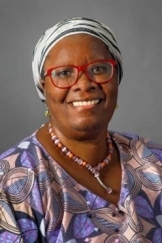
Appointed as UN Women Deputy Executive Director in February 2024. Holds an LLM from the University of South Africa and an Honorary Doctorate from the University of Massachusetts. With over 35 years of experience in human rights, gender equality, and women's empowerment, has served at UNICEF, UNIFEM, and the World YWCA, and as the AU's first Goodwill Ambassador on Ending Child Marriage.
Panel Discussion 1: Realizing Well-being through the Promotion of Gender Equality
(Speakers listed below the moderator are in alphabetical order. Titles omitted.)
Moderator
JIBU Renge, Associate Professor, Institute of Science Tokyo
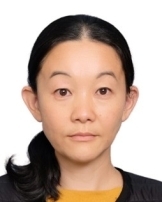
Graduate of Hitotsubashi University (LL.B., M.B.A.). Former journalist at Nikkei Business Publications and Fulbright Visiting Researcher at the University of Michigan. Currently researches corporate responses to changing social norms. Member of the Cabinet Office Expert Committee for the Sixth Basic Plan for Gender Equality and the Japanese National Commission for UNESCO.
CHIBA Kanako, Secretariat, Kesennuma Tsubaki-kai
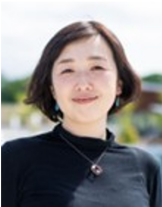
Born in Kesennuma, Miyagi Prefecture. As secretariat of Kesennuma Tsubaki-kai, a civic general incorporated association, she works to create a fisheries industry shaped by women's perspectives and to advance women's political participation. She serves as coordinator of the Kesennuma Gender Gap Project, co-hosted by the city and the Chamber of Commerce and Industry, addressing gender equality from the perspective of regional sustainability.
KIMURA Mai, Diversity promotion/Gender Inequality Prevention Office, the Toyooka City Government, Hyogo

Joined the Toyooka City Government in 2024 following a career in the private sector. Currently works in the Diversity promotion/Gender Inequality Prevention Office, focusing on closing workplace gender gaps in partnership with local businesses. Responsibilities include supporting women’s economic empowerment and leading professional development programs to foster future women leaders.
KUSHIYAMA Sohei, Chief Diversity Officer Office, People & Culture Division, NEC Corporation

Joined NEC in 2025 as a mid-career hire. Within the People & Culture Division's Chief Diversity Officer Office, he is responsible for promoting gender equality, supporting paternity leave uptake among male employees, and fostering and advancing an inclusive workplace culture across the company, drawing on his experience to help build a workplace where everyone can thrive.
OCHI Misora, Representative director, NPO manma

Representative of NPO manma, which operates "Family Study Abroad" programs and life design seminars nationwide, reaching over 6,000 participants to date. Having launched manma during university years, formally incorporated it as a nonprofit organization in 2021. Has served on expert committees under the Children and Families Agency and other advisory bodies. Mother of three.
UMEHARA Saki, PhD student at Institute of Science Tokyo
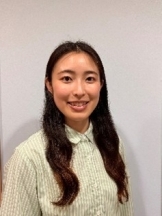
JSPS DC1 Research Fellow (Informatics, DNA nanotechnology). Began research in high school and studied chronobiology and immunology during her master’s degree. Served as the first female captain of her competitive skiing club of Institute of Science Tokyo,, leading its revitalization. Studied in the United States and completed an internship in Slovakia. Currently serves as a council member and role model for Women in Science Tokyo.
Report from Young Researchers (In order of appearance, titles omitted)
KOZAKA Yukino, Japanese Youth Representative at 70th Session of the Commission on the Status of Women

From Ishikawa Prefecture. Participated in the 70th session of the UN Commission on the Status of Women (CSW70) as the Youth Representative of Japan. Received an M.A. from Nara Women's University and plans to continue research in Europe. Specializes in gender studies on physical expression and media representations, and engages in social activities addressing gender issues facing young people.
SUZUKI Riyuka, Young Researcher dispatched to The Peace Research Institute Oslo

Holds an MScR in Social and Political Science from the University of Edinburgh and a BA in Gender and Sexuality Studies and Politics from International Christian University. Conducted quantitative research on the roles of gender identity and ideologies in shaping individual defence attitudes. Served as a Youth Delegate in the Government of Japan’s delegation to CSW68.
TOMONAGA Asuka, Young Researcher dispatched to Georgetown Institute for Women, Peace and Security
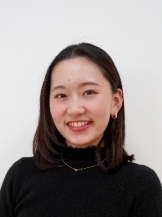
Asuka Tomonaga is a master's student in sociology at Hitotsubashi University, specializing in gender studies. Her research examines how ignorance about sexuality and the body is produced socially and structurally, rather than being a matter of individual choice.
Panel Discussion 2: Gender Equality in the Digital Age (Speakers listed below the moderator are in alphabetical order. Titles omitted.)
Moderator
NAGASHIMA Miki, Advocacy Group Leader, Plan International Japan
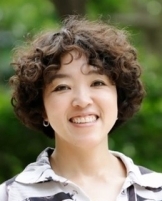
Ph.D. in Political Science. After engaging in planning and managing various campaign projects, she now leads research and policy proposals on girls’ leadership and empowerment at Plan International Japan. She serves as an Expert Member of Japan’s Council for Gender Equality (Cabinet Office) and as Co-Delegate of W20 Japan.
ODA Elizabeth, Technical Project Manager, Braid Technologies / Co-founder, Women in Science Japan

Elizabeth Oda co-founded Women in Science Japan, supporting women in STEM through mentorship, leadership development, and machine learning education. She leads AI-powered engineering design software development at Braid Technologies. In 2024, with support from Japan’s Ministry of Foreign Affairs, she spoke at APEC on opportunities for women in the AI economy and strategies for inclusive innovation.
IWASAKI Kanon, Assistant Chief, Human Resource Development Group, Personnel Affairs Office, Human Resource Development Group, General Affairs Department, National Institute of Information and Communications Technology (NICT)
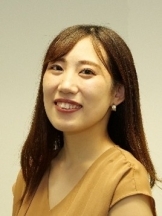
Joined NICT in 2021. As a member of the Diversity Promotion Project, she is involved in creating a workplace environment where diverse talent can thrive and organizing internal events to foster an inclusive culture. She participated in the 70th session of the UN Commission on the Status of Women (CSW70) as a BPW Japan intern
MATSUNOBU Akari, Undergraduate student at Kyushu University

Undergraduate student at Kyushu University’s School of Interdisciplinary Science and Innovation. Inspired by experiences in childhood, aims to become a researcher exploring gender discrimination from the perspective of gender economics. While in high school, co-founded a women’s empowerment organization “Mimosequal” based in Saga Prefecture, Japan.
NAGAMORI Sumire, Representative of Hiiragi Net
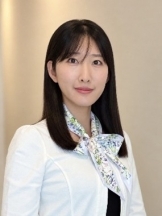
Representative of Hiiragi Net, a civil volunteer organization dedicated to reporting digital sexual violence content. Collaborated with NHK to investigate non-consensual filming for a documentary, winning the 2025 Hoso Bunka Foundation Award for Investigative Journalism. Also delivers speeches and engages in policy advocacy toward total eradication of digital sexual violence.
SUGINOHARA Akiko, CEO of Code for Everyone (NPO)
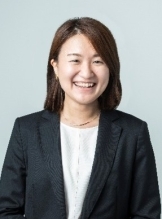
Joined Code for Everyone (NPO) in 2021 and became its CEO in 2025. She serves on the Project Promotion Committee for the Japanese Ministry of Education’s FY2026 initiative to address educational challenges and accelerate education DX through generative AI. She also serves as an outside director for several venture companies.
Closing
MC
USUKI Futaba, Master’s Student in Gender and Social Sciences, Graduate School of Humanities and Sciences, Ochanomizu University
- 18:00
- Networking Reception
- 19:30
- End
General Audience Registration
Online registration for the 2nd Next Generation forum for Gender Equality is available until 12:00 noon on October 22 (Thu). If there are excessive number of applicants, we may determine audience by lot.
Please make sure to show your registration completion email on your smartphone or bring a printout of the email at the registration desk along with your photo ID. Please note that the registration completion email is different from the [Application Received] email.