
Disarmament and Non-Proliferation, Peaceful Uses of Nuclear Technology
22nd Meeting of the States Parties to the Anti-Personnel Mine Ban Convention
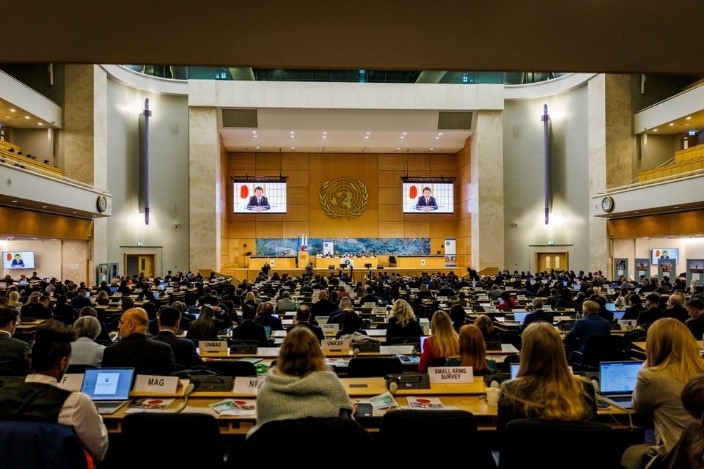 (Photo: APMBC ISU)
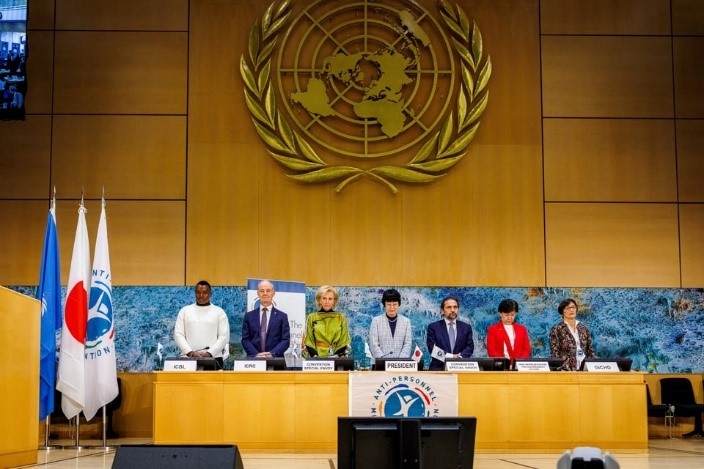 (Photo: APMBC ISU)
From December 1 to 5, 2025, the 22nd Meeting of the States Parties to the Anti-Personnel Mine Ban Convention (APMBC or Ottawa Convention) was held in Geneva, Switzerland, chaired by Ms. ICHIKAWA Tomiko, Ambassador Extraordinary and Plenipotentiary, Permanent Representative of Japan to the Conference on Disarmament.
1. Opening
The meeting began with the viewing of a video message from Mr. MOTEGI Toshimitsu, Minister for Foreign Affairs of Japan, followed by a video message from H.E. Mr. António Manuel de Oliveira Guterres, Secretary-General of the United Nations. Following this, remarks were made by Ms. Izumi Nakamitsu, Under Secretary General and High Representative for Disarmament Affairs of the United Nations, Her Royal Highness Princess Astrid, Kingdom of Belgium (Convention’s Special Envoy), His Royal Highness Prince Mired bin Raad bin Zaid of Jordan (Convention’s Special Envoy), and representatives of landmine victims.
2. Overview of the Meeting
During its presidency of the 22nd Meeting of States Parties, Japan managed the meeting energetically, coordinating with various countries to promote the implementation of the APMBC. The final report (PDF)  was adopted by consensus on the last day of the meeting.
During this meeting of States Parties, extensions to the anti-personnel mine destruction deadline were approved for 12 of the 14 countries that had submitted requests, including Angola and Cambodia. The requests from Senegal and Tajikistan, however, were not approved at this time as they were submitted late. Nevertheless, it was agreed that Senegal and Tajikistan could resubmit their extension requests during the process of the 23rd Meeting of States Parties.
States Parties and Observer States welcomed the completion of domestic mine clearance in Oman this year, the ratification of the Convention by the Republic of the Marshall Islands, and the accession by the Kingdom of Tonga to the Convention.
Discussions were also held on issues such as the withdrawal of the Baltic States, Finland, and Poland from the Convention, Ukraine's communication of their "suspension of operation" of the Convention, and the landmine incidents on the Cambodia-Thailand border.
3. Japan's Initiatives
Japan has promoted initiatives under the following four key areas for its presidency: "strengthening national ownership and capacity building assistance," "application of advanced and emerging technologies in mine action," "strengthening of the synergies between Women, Peace and Security (WPS) agenda and mine action," and "universalization of the Convention." The specific achievements for each area are as follows:
(1) Capacity Building
Recognizing that strengthening "national ownership" and providing support for "capacity building" are effective in promoting mine action activities, Japan has implemented initiatives to strengthen the capacity of affected countries based on the "Comprehensive Package of Assistance to Humanitarian Mine Action," which aims to promote triangular cooperation in partnership with Cambodia and strengthen cooperation with relevant organizations. During this meeting, Japan shared this concrete achievement with the States Parties, submitting the working paper "Strengthening National Ownership and National Capacity for Mine Action (PDF) ." At the thematic panel on “Sustainable Capacity Building” on the final day, Ms. KOMUKAI Eri, Senior Advisor of the Japan International Cooperation Agency (JICA), served as a panelist and reported on the Japan’s achievements.
(2) Application of Emerging Technologies
Japan has been actively working to promote more efficient mine action. This involves sharing its knowledge and experience in mine action, particularly regarding the utilization of emerging technologies, with other States Parties. Additionally, Japan collaborates with various countries, leveraging their emerging technologies to further enhance mine action efforts. During this meeting, Japan submitted the working paper "Promoting Anti-Personnel Mine Action through the Use of Emerging Technologies (PDF) " and screened a video on the application of emerging technologies in mine action.
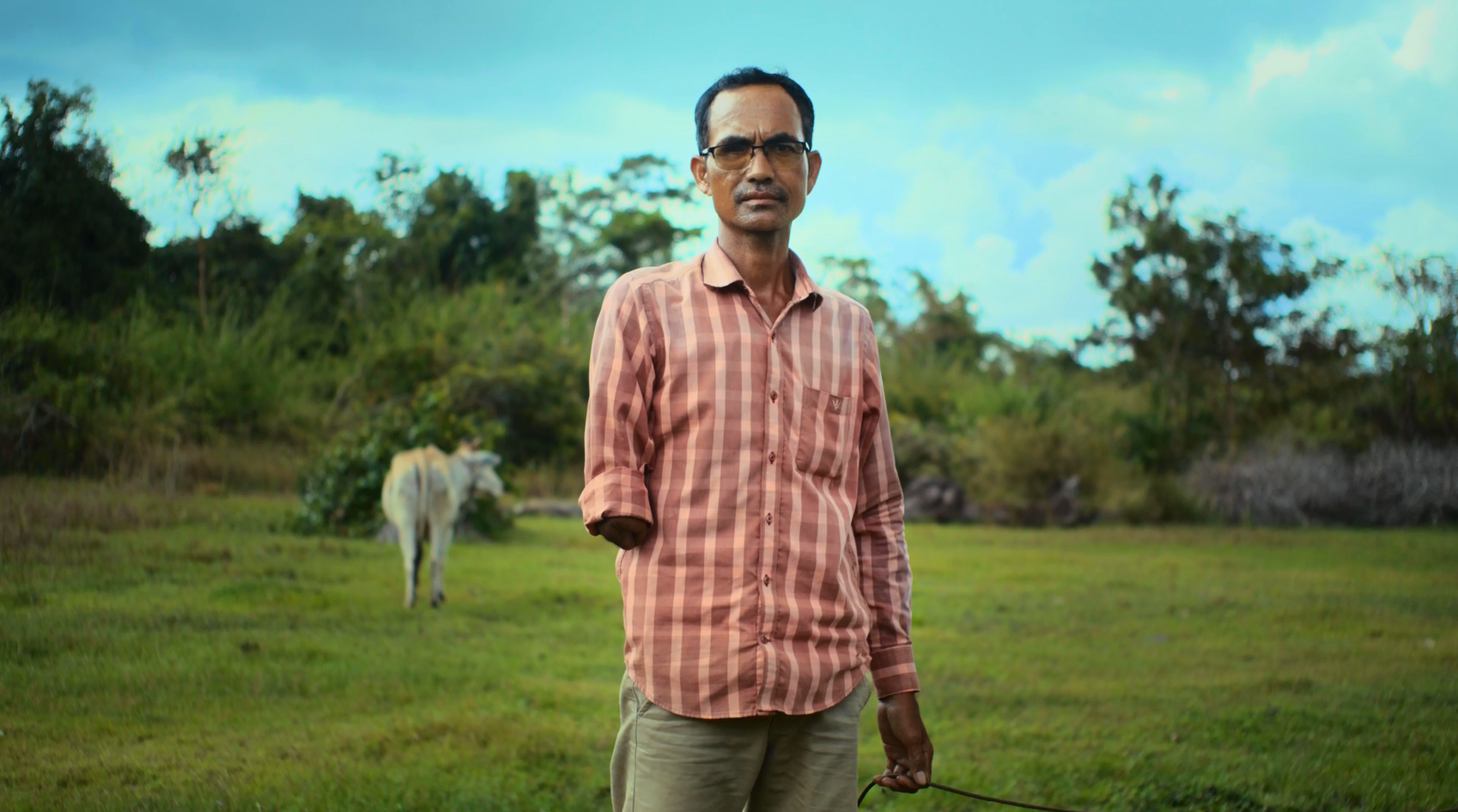
Application of Advanced and Emerging Technologies in Mine Action (YouTube) 
(3) Synergies with WPS
At a side event during the 28th International Meeting of Mine Action National Directors and United Nations Advisers in April 2025, and at a panel discussion during the intersessional meetings of the APMBC in June 2025, Japan discussed the importance of synergies between WPS and mine action, and the importance of the sharing of best practices.
(4) Universalization of the Convention
Following the presidencies of Germany (2023) and Cambodia (2024), Japan has actively continued outreach to non-States Parties in the Pacific region, resulting in the ratification of the Convention by the Republic of the Marshall Islands, and the accession by the Kingdom of Tonga to the Convention this year.
4. Future Meetings
The Ambassador of Zambia to Geneva will serve as the President of the 23rd Meeting of States Parties in 2026. In addition, during the 22nd Meeting of States Parties, the Ambassador of Belgium to Geneva was elected as the President of the 24th Meeting of States Parties in 2027.
Japan, in cooperation with the States Parties to the APMBC and all other stakeholders, will continue to actively contribute to the realization of a mine-free world.
(Note) The Anti-Personnel Mine Ban Convention (Ottawa Convention) entered into force on March 1, 1999. The Meeting of States Parties is held once a year, and discussions on the implementation of the Convention are held with the participation of States Parties (currently 166 countries and regions), signatory states, UN agencies, international organizations, and NGOs.