The Hague Convention (Convention on the Civil Aspects of International Child Abduction)
Hague Convention: What you need to know
1. Overview of the Hague Convention
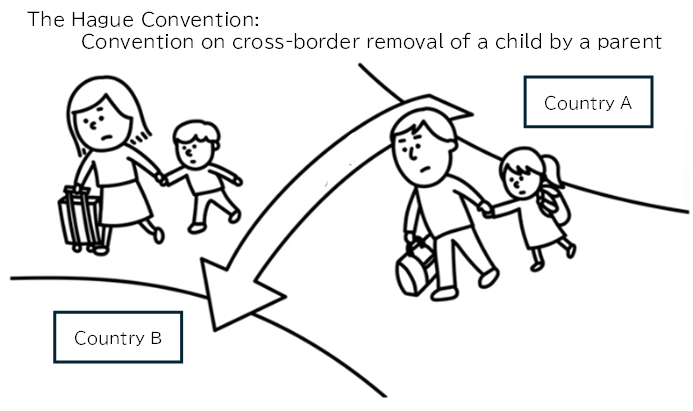
The official name of the Hague Convention is the "Convention on the Civil Aspects of International Child Abduction." Wrongful cross-border removal or retention of children can have negative effects on them, including sudden and drastic changes in living conditions, forcing them to adapt to a different language and cultural environment, and the severance of contact with a parent, relatives, and friends. Furthermore, in cases where a child has been wrongfully removed or retained by one parent, it is generally considered desirable that the child be returned to the country of origin (State of the child’s habitual residence), and that arrangements for the child’s future, such as matters of parental responsibility, who the child will live with and where, be decided through the judicial system of the country where the child had been living prior to the removal or retention. Based on this recognition, the Hague Convention establishes procedures and international cooperation to ensure that a child who has been wrongfully removed or retained can, as a general rule, be promptly returned to the State of the child’s habitual residence, and that cross-border contact between parent and child can be facilitated, all from the perspective of the interests of the child.
- State of habitual residence
"State of habitual residence" refers to the country in which a child has established a “habitual residence” - understood as a permanent place of residence where the child lived for a considerable period of time, as opposed to a temporary residence. For example, if a child had been living in Country A since birth, it is likely that Country A is the State of the child’s habitual residence. However, as the question of which country is a state of child’s habitual residence may be contested during a trial, the ultimate determination is left to the court. The country where the child had been living prior to their removal is not automatically considered as the State of their habitual residence; rather, the court will determine the State of the child’s habitual residence through a comprehensive assessment of various factors, including the duration, purpose, and circumstances of the child’s stay in that country. - Wrongful removal or retention
"Wrongful removal of a child" refers to a parent taking a child to a foreign country from the State of the child’s habitual residence, in a manner that infringes upon the custody rights of the other parent.
“Retention" refers to the situation wherein a child is prevented from traveling back to the State of the child’s habitual residence after leaving that country. This includes cases where, for example, one parent takes the child to a foreign country under a time-limited agreement, but fails to return the child to the State of the child’s habitual residence after the agreed-upon deadline has passed. Even if prior consent was obtained from the other parent for the trip, failure to return the child by the deadline constitutes retention.
Under the Hague Convention, each Contracting State is required to designate a Central Authority, with the decision on which governmental agency is to assume such role being delegated to the Contracting State. In Japan, the Minister for Foreign Affairs serves as the designated Central Authority, and practical matters are managed by the Hague Convention Division under the Consular Affairs Bureau of the Ministry of Foreign Affairs.
2. Scope of Application of the Convention (Child Return Cases)
Concerning the return of a child, the Hague Convention applies in cases with the following attributes. Nationality of the child or parents is not a factor, and the Convention may apply even in cases where all parties involved are Japanese citizens, or where a child or parent does not hold the nationality of a Contracting State.
- The child is under 16 years of age.
- Both the State of the child’s habitual residence and the State where the child is currently located are Contracting States to the Hague Convention.
- The left behind parent's custody rights are infringed upon by the removal or retention of the child.
Conversely, the following cases do not fall within the scope of the Hague Convention.
- Removal or retention of a child aged 16 or older
- Removal or retention of a child within the same country
- Removal or retention of a child to a country that is not a Contracting State
- Removal or retention of a child from a country that is not a Contracting State
3. Application to Central Authorities for Assistance
If your child has been removed to or is being retained in Japan from another Contracting State of the Hague Convention , or conversely, removed from Japan to or retained in another Contracting State, you can apply to the Central Authority in either state for assistance concerning the child’s return. The Hague Convention also prescribes support for contact with children living in other countries; parents who wish to re-establish access to a child located in Japan or another Contracting State may seek assistance from the relevant Central Authority. The Ministry of Foreign Affairs, acting as Japan’s Central Authority, provides various forms of support for both parties involved in these cases.
- [Notes]
-
- The procedure for return of a child under the Hague Convention is designed to determine whether or not a child is to be returned to the State of the child’s habitual residence. It is not, however, a procedure that decides on parental responsibility or custody rights concerning the child. Furthermore, the Convention’s explicit objective is the return of the child to the State of their habitual residence, not necessarily to the left behind parent.
- The final decision regarding the return of a child or contact with a child rests with the court or other relevant authority in the country where the child is located. Central Authorities do not pass judgment on child’s return or contact with a child, and their decision to provide assistance does not imply any ruling on these matters.
4. Videos
Let’s study the Hague Child Abduction Convention!