
Nuclear Disarmament and Non-Proliferation
The 32nd Asian Export Control Seminar
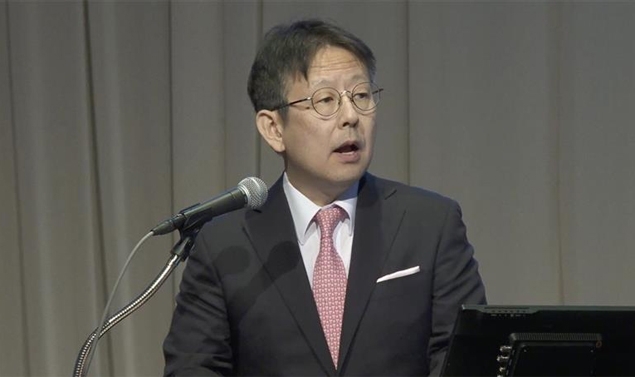 Dr. NAKAMURA Kimitake, Ambassador, Director-General for Disarmament, Non-proliferation and Science, Ministry of Foreign Affairs of Japan, delivered opening remarks.
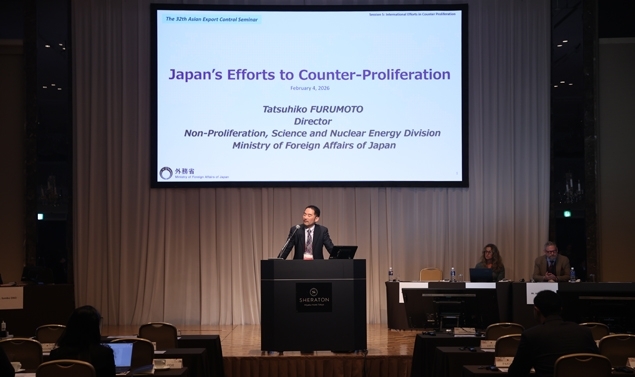 Mr. FURUMOTO Tatsuhiko, Director, Non-Proliferation, Science and Nuclear Energy Division, Ministry of Foreign Affairs of Japan, delivered a presentation on the Ministry's non-proliferation efforts.
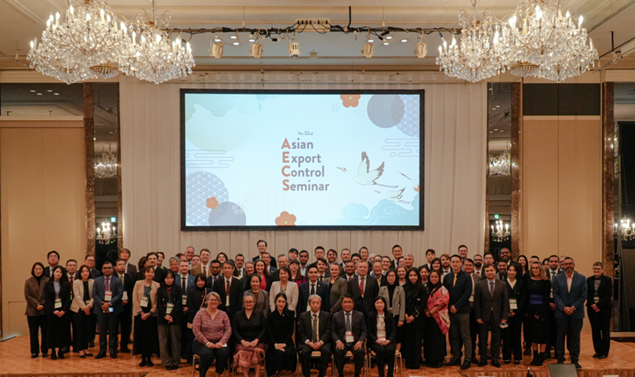
The 32nd Asian Export Control Seminar was held from February 3 to 5, 2026. The seminar was organized by the Center for Information on Security Trade Control (CISTEC) and co-hosted by the Ministry of Foreign Affairs and the Ministry of Economy, Trade and Industry. It brought together approximately 130 participants from 29 countries and regions as well as 5 international and other organizations.
1. Background
As Asian countries and regions continue to develop as manufacturing and trading hubs amid their economic growth, they are exposed to an increasing risk of unintentionally contributing to illicit procurement activities by countries of concern regarding items and technologies that can be diverted to develop weapons of mass destruction. Non-proliferation efforts including export controls is becoming increasingly important especially due to the growing complexity of supply chains, the rise of dual-use technologies and the challenging regional and international landscape. In light of these challenges, this seminar has been held since 1993 to strengthen non-proliferation systems in Asia, which are directly linked to Japan’s security, by raising awareness and building capacity of officials in charge of export controls in Asian countries and regions.
2. Outline
(1) Updates on Export Control Systems
Japan, the European Union, Singapore, and the Philippines presented their recent initiatives in response to evolving security challenges. Discussions covered the impact of economic security on export controls, the growing risk of military diversion of dual-use items, appropriate export control approaches for emerging technologies such as advanced semiconductors, AI, and quantum technologies, and the importance of export control cooperation in Asia, particularly within the ASEAN region. Participants exchanged views on how each country and region is addressing these challenges.
(2) Export Control Systems in Asian Countries and Regions
Thailand, Bangladesh, Laos, Cambodia, Malaysia, and Pakistan shared updates on their latest export control efforts and challenges.
Specifically, they shared how they are working to enhance the effectiveness of domestic export control systems through legal and regulatory development in line with United Nations Security Council Resolution (UNSCR) 1540, the introduction of catch-all controls and risk-based licensing, and the promotion of internal compliance programs (ICP).
They also highlighted challenges such as outreach to industry and academia, human resource development, and the need to strengthen staffing, enforcement capacity, and interagency coordination of relevant domestic organizations. In addition, participants exchanged views on enhancing licensing and enforcement through digitalization, including electronic application systems, and balancing trade facilitation with security objectives.
(3) Nexus between AI, Economic Development, and Export Controls
Two think tank experts delivered presentations on: a. export control challenges related to AI and associated technologies, as well as the potential use of AI in licensing and risk assessment; and b. the economic effects of introducing export control systems and their positive impact on economic development.
(4) Intangible Technology Transfer
The Netherlands, Norway, the Republic of Korea, Canada, and Japan presented their latest initiatives for appropriately controlling intangible technology transfers, including strengthened outreach to universities and research institutions, responses to cloud computing, and enhanced information sharing between government and industry.
(5) Licensing
The United Kingdom, Germany, Luxembourg, and the Philippines outlined their respective domestic systems such as licensing policies and processes and interagency cooperation in risk assessment, as well as challenges related to human resource development.
(6) Enforcement and Compliance
Australia, Switzerland, India, and Japan shared initiatives related to enforcement and compliance of export control laws and regulations, including outreach to industry, strengthening exporter compliance, and case study of violations.
(7) Presentations by International Organizations and Export Control Regimes
Japan, the United Nations Office for Disarmament Affairs, and an academic institution presented their latest initiatives and outreach activities related to the Proliferation Security Initiative and UNSCR 1540 with the objective of counter-proliferation of weapons of mass destruction.
In addition, the representatives of international export control regimes – the Nuclear Suppliers Group, Australia Group, Missile Technology Control Regime, and Wassenaar Arrangement – explained their roles and recent initiatives in response to technological developments:.
3. Participating Countries, Regions, and International and Other Organizations
(1) Asia (13 countries/regions)
Japan, Bangladesh, Cambodia, India, Laos, Malaysia, Pakistan, Philippines, Republic of Korea, Singapore, Taiwan, Thailand, and Vietnam
(2) Outside Asia (16 countries/regions)
Australia, Austria, Canada, Czech Republic, Estonia, European Union, Finland, France, Germany, Luxembourg, Netherlands, Norway, Turkey, Ukraine, United Kingdom, and United States
(3) International and Other Organizations (5 organizations)
United Nations Office for Disarmament Affairs, Australia Group, Nuclear Suppliers Group, Missile Technology Control Regime, and Wassenaar Arrangement