
Asia
Mekong-Japan Foreign Ministers’ Meeting
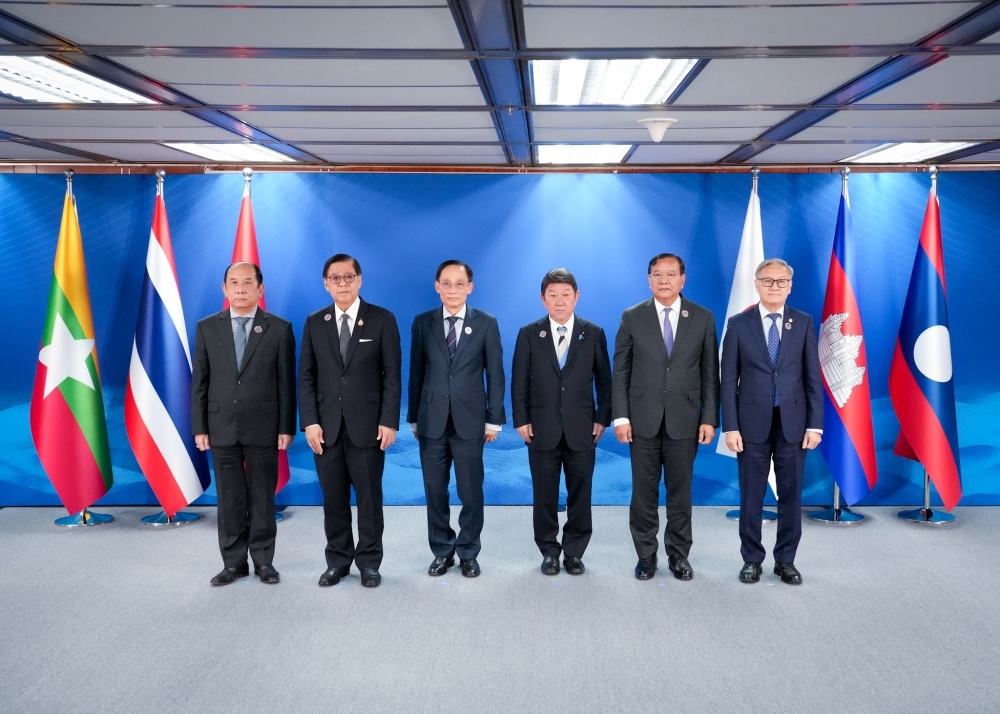
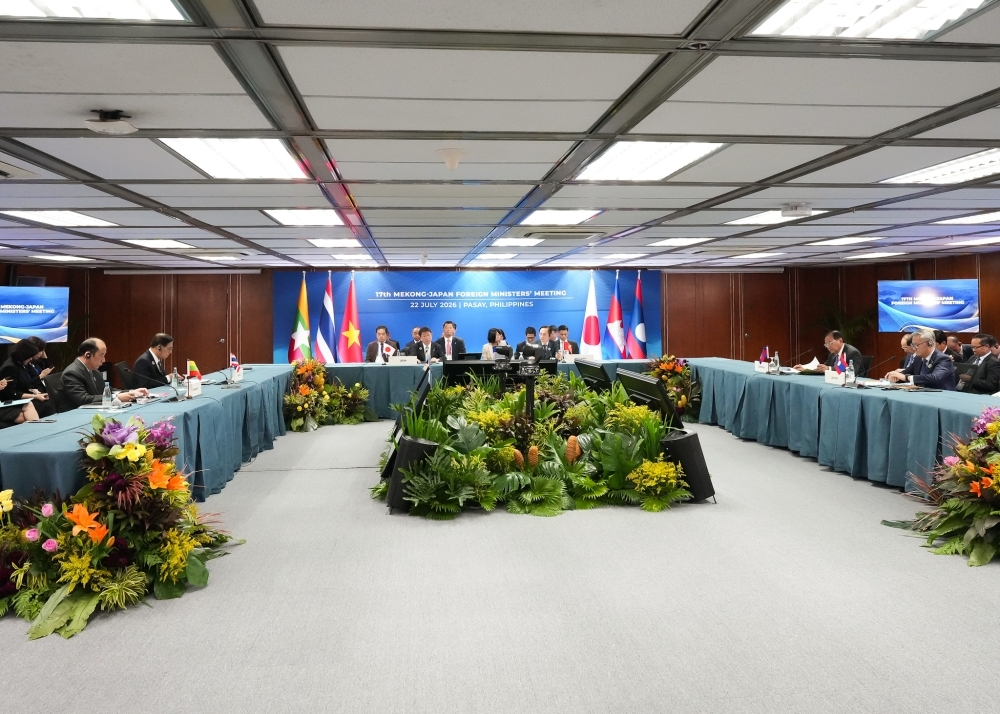
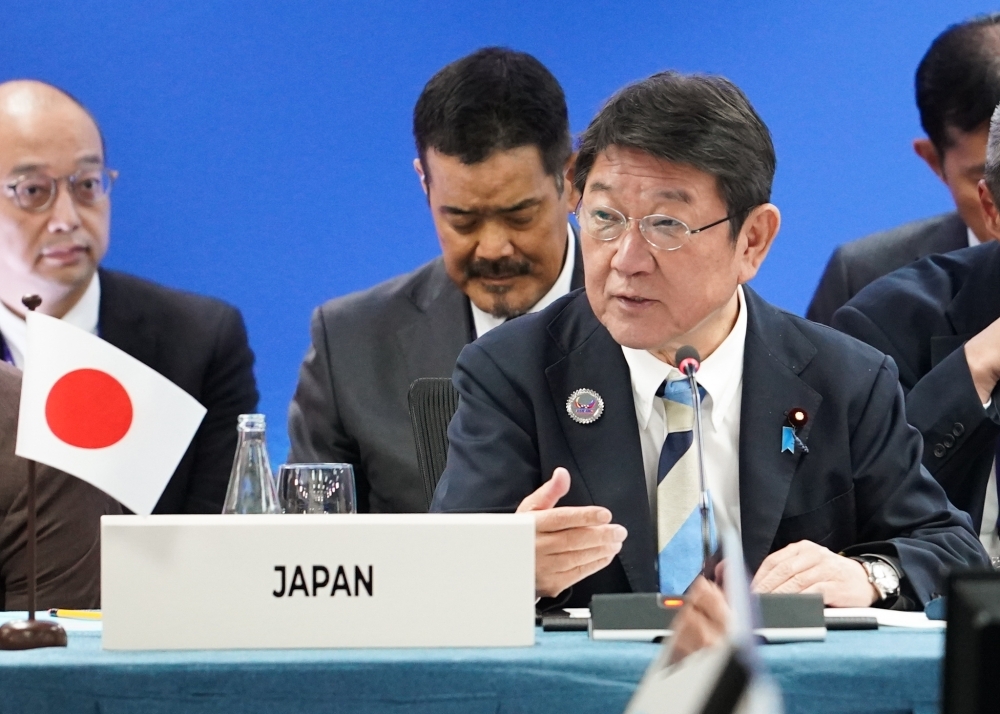
On July 22, commencing at 6:10 p.m. (7:10 p.m., Japan time) for approximately 50 minutes, the 17th Mekong-Japan Foreign Ministers’ Meeting was co-chaired by Mr. MOTEGI Toshimitsu, Minister for Foreign Affairs of Japan, and H.E. Mr. Le Hoai Trung, Minister of Foreign Affairs of the Socialist Republic of Viet Nam as in Manila, the Philippines. The summary of the meeting is as follows. After the meeting, the Co-chair Statement of the 17th Mekong – Japan Foreign Ministers’ Meeting on the implementation of the “MekongJapan Cooperation Strategy 2024” was issued.
1. Opening Remarks
Minister MOTEGI stated that the Mekong region is a key region for realizing the updated Free and Open Indo-Pacific (FOIP). He noted that, amid transboundary challenges such as the energy crisis, climate change, and scam centers, it is essential for countries to work together to enhance freedom to decide for themselves and resilience in various aspects, such as economic, social, and security domains. He also pointed out that the scope of cooperation has expanded more than ever before, including in energy security, economic security including critical minerals, and emerging technologies such as AI. He expressed his desire to further develop Mekong-Japan cooperation by expanding, across the Mekong region, the cooperation that Japan is advancing bilaterally with each country, with the aim of becoming stronger and more prosperous together.
2. Progress of Mekong-Japan Cooperation
- The Mekong countries highly valued and expressed their appreciation for Japan’s support and commitment to the Mekong region by stating that Japan is an indispensable partner and expressed expectations for further cooperation in areas such as enhancing connectivity, digitalization, water resource management, and countermeasures against transnational crime.
- Minister MOTEGI stated that Japan will prioritize five areas, namely, energy, transnational crime, water resource management, security, and connectivity, for MekongJapan cooperation, and outlined them as follows:
- A. Energy
In order to maintain economic activities and ensure a stable supply of petroleum products under the current situation in the Middle East, Japan will work together to strengthen the region’s supply chains, including by leveraging the "POWERR Asia" framework proposed by Japan. Japan will also enhance capacity building related to the promotion of renewable energy and energy conservation, developing of transmission, distribution networks, and regulatory frameworks for cross-border power trade.
- B. Transnational crime
Addressing organized fraud, including scam centers, is an urgent priority. Japan has implemented projects to strengthen digital investigative capabilities in Cambodia, Laos, Viet Nam, and Thailand. Japan has also decided to provide funding, through the ASEANAPOL, to support the establishment of national anti-scam centers in ASEAN member states. Japan will further strengthen coordination among police authorities by utilizing a liaison officer of the Japan National Police Agency newly dispatched to Bangkok.
- C. Water resource management
Capitalizing on Japan's strengths, Japan will continue to cooperate in strengthening measures against floods and droughts in the mainstream and tributaries of the Mekong River. With regard to water quality challenges associated with mining development in the Mekong basin and the industrialization of the countries in the basin, Japan will support cross-regional initiatives for water quality management in order to balance development in the basin with environmental conservation in coordination with the Mekong River Commission.
- D. Security
Amid the increasingly severe international situation, Japan will continue to contribute to enhancing the security capabilities of the Mekong countries. Japan is seriously concerned about malicious cyber activities by North Korea, including cryptocurrency thefts to fund its nuclear and missile development, and would like to support the strengthening of cybersecurity capacities in the Mekong countries.
- E. Enhancing connectivity
For inclusive and open regional development, it is essential to enhance connectivity not only through transport infrastructure but also in a wide range of domains, such as AI and digital, maritime, and supply chains. In this regard, the steady implementation of the ceasefire agreement and de-escalation between Cambodia and Thailand is important and this will lead to enhanced connectivity. Japan will cooperate through efforts such as promoting dialogue and supporting the livelihood of returnees.
3. Situation in Myanmar
Minister MOTEGI stated that progress is necessary toward the immediate cessation of violence, the release of detainees, and political progress including dialogue among parties concerned. He stated that Japan will work with the Mekong countries to lead to an improvement in the situation.
4. Conclusion
At the end of the meeting, Minister MOTEGI stated that Japan would steadily advance Mekong-Japan cooperation to enhance the region’s resilience and freedom to decide for themselves. The Mekong countries expressed their support and appreciation for Japan’s cooperation. Furthermore, it was decided to issue the Co-chair Statement of the 17th Mekong-Japan Foreign Ministers’ Meeting on the implementation of the “Mekong-Japan Cooperation Strategy 2024.”
