
Press Releases
The 48th Antarctic Treaty Consultative Meeting (ATCM 48) (Results)
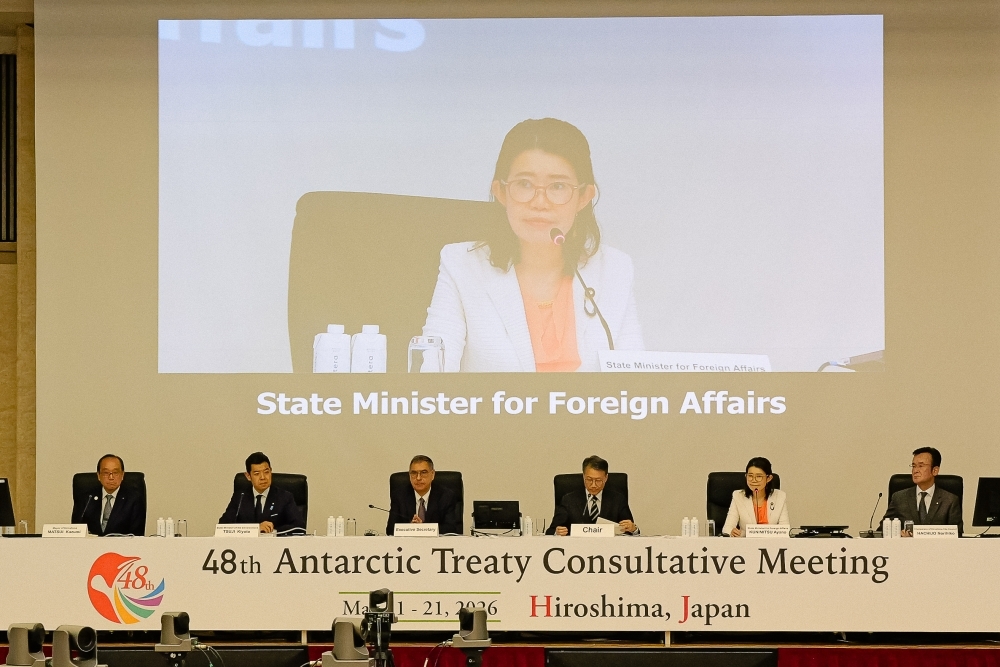
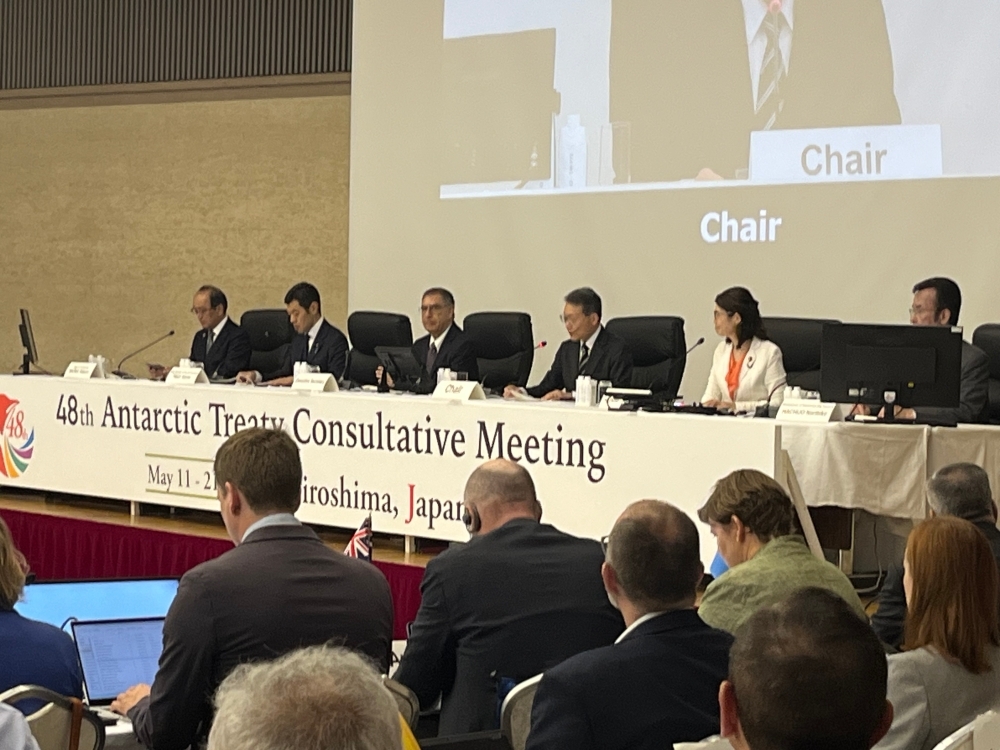
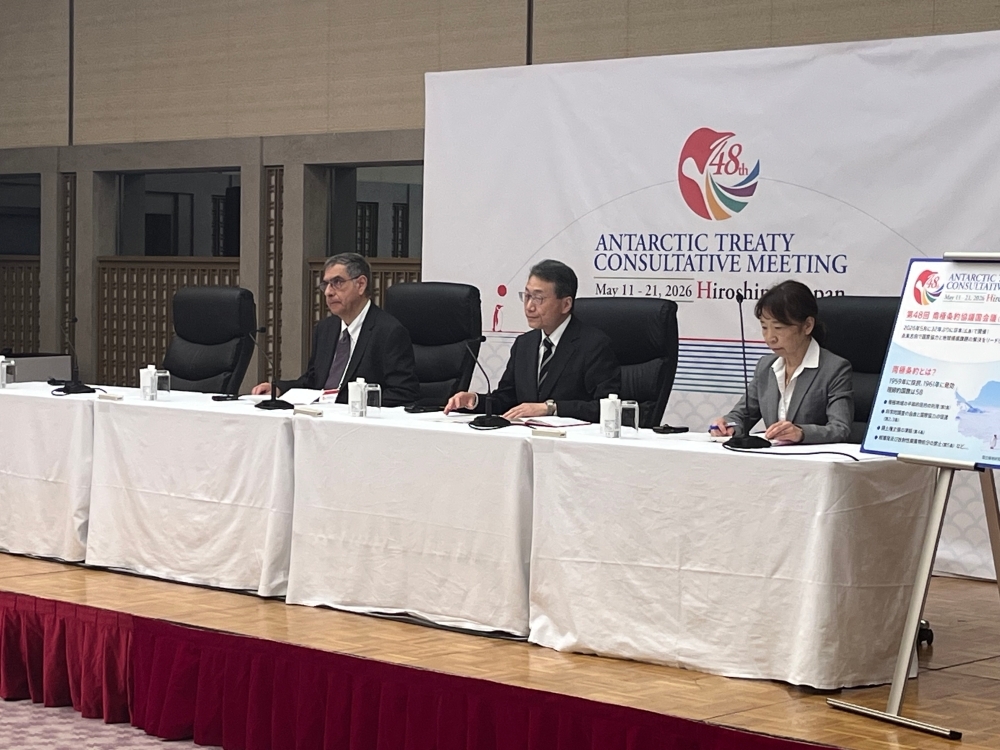
The 48th Antarctic Treaty Consultative Meeting (ATCM 48) was held in Hiroshima from May 11 to 21, 2026. The meeting was attended by over 400 participants from 44 countries and related organizations.
- Marking the first time Japan has hosted the meeting in 32 years since 1994, UYAMA Hideki, Ambassador in charge of the Antarctic Treaty Consultative Meeting (ATCM), served as Chair of at this meeting (ATCM48). Dr. KUNIMITSU Ayano, State Minister for Foreign Affairs, Mr. TSUJI Kiyoto, State Minister of the Environment, and Mr. Matsui Kazumi, Mayor of Hiroshima attended the opening ceremony on May 12 and each of whom delivered remarks. State Minister Dr. Kunimitsu highlighted that the Antarctic Treaty, which is founded on peaceful use and international cooperation, shares a deep affinity with Hiroshima, a city that has continuously sent out messages of peace. She called for demonstrating to the world from Hiroshima a firm commitment to advancing the peaceful use of Antarctica, and international cooperation for scientific research activities and environmental protection.
- The main outcomes of this meeting are as follows:
- Antarctic Environmental Protection
Two new Antarctic Specially Protected Areas (ASPAs) were established. All Parties recognized the risks to the survival of the emperor penguin due to declining sea ice and there was a consensus on prioritizing the protection of emperor penguins, and continuing considerations on appropriate measures to achieve this. Additionally, a joint workshop of the Committee for Environmental Protection (CEP) and the Scientific Committee for the Conservation of Antarctic Marine Living Resources (SC-CAMLR) was held to discuss climate change and monitoring in Antarctica. - Enhancing Transparency
The importance of exchanging information on each party’s activities in Antarctica was reaffirmed, and a resolution was adopted to encourage information exchange among parties. - Tourism Framework
To address the increase and diversification of Antarctic tourism, concrete methods of regulation, management, and monitoring were discussed, and these discussions will continue during the intersessional period. - Workshop on Education and Outreach
Parties introduced their respective initiatives, and it was confirmed to launch an permanent online forum to enable exchange of information regarding party’s efforts toward the 5th International Polar Year (2032–33). - Consultative Status
Discussions were held regarding the requests from Canada, Belarus and Türkiye for Consultative Party status, based on an assessment of their substantive scientific research activities in Antarctica, and it was confirmed to continue discussions from a scientific perspective.
- Antarctic Environmental Protection
In addition, exhibitions were held at the venue highlighting the activities of the National Institute of Polar Research, which celebrates its 70th anniversary of Antarctic research this year, as well as Japan's efforts toward environmental protection in Antarctica.
(Reference1) Attachment
ATCM48 Host Country Communiqué (Full text in English (PDF) and its translation in Japanese (PDF) attached)
(Reference2) Antarctic Treaty Consultative Meeting (ATCM)
Parties that are conducting substantial scientific research activities in Antarctica are called Consultative Parties (29 Parties). At ATCM, discussions take place on the peaceful use of Antarctica, promotion of scientific research, and the protection of Antarctic environment (once a year). The meeting is hosted by each consultative party on a rotating basis. The Committee for Environmental Protection (CEP) is convened on the sidelines of the ATCM in accordance with the Protocol on Environmental Protection to the Antarctic Treaty.
(Reference3) The Antarctic Treaty
- The Treaty was adopted by 12 countries including Japan in 1959, entering into force in 1961 (Japan is one of the original signatories).
- As of April 2026, the number of Parties is 58.
- The Antarctic Treaty applies to the area south of 60 degrees South Latitude. The Treaty contains the following principal provisions:
- Peaceful use of Antarctica (including prohibition on establishing military bases and carrying out military maneuvers) (Article 1)
- Freedom of scientific investigation and promotion of international cooperation (Articles 2 and 3)
- Freeze of territorial claims (Article 4)
- Prohibition on nuclear testing and radioactive waste disposal (Article 5)