
ODA Topics 1
New Approaches to Development Finance Mobilization in the Changing Era
From March to May 2024, under the leadership of then Foreign Minister Kamikawa, the Advisory Panel on New Financing for Development was convened three times and in July, the panel submitted its recommendations to the Minister, entitled “Contributing to a Sustainable Future and Creating a Virtuous Cycle of Growth.”Note 1
In this column, Professor Emeritus OHNO Izumi of the National Graduate Institute for Policy Studies and Chair of the panel, and committee member KANEKO Tadahiro, Executive Officer of Sumitomo Mitsui Banking Corporation, shared their perspectives on the future of ODA, drawing on the panel’s discussions and recommendations.
■OHNO Izumi, Professor Emeritus, National Graduate Institute for Policy Studies (GRIPS)
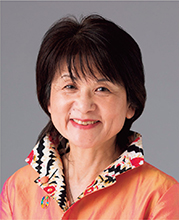
For more than 70 years, Japan has significantly contributed to economic and human resources development in developing countries through ODA. It is particularly worth noting that Japan, having reemerged as a peaceful nation after World War II, has built broad trust in the international community through non-military development cooperation.
Japan, once a non-Western latecomer to development, has the dual experience of being both a “learner” and a “provider” of development knowledge. Based on this experience, Japan’s development cooperation respects the uniqueness and ownership of each partner country, takes a human-centered approach, and emphasizes support that is closely aligned with local needs. This approach has been widely appreciated by many governments, organizations, and people in developing countries.
At the same time, the international development landscape is undergoing significant transformation, necessitating a paradigm shift in development cooperation “from aid to co-creation.” This shift is driven by several factors: (1) development challenges are becoming more complex, requiring mutual learning and joint problem-solving between developed and developing countries; (2) private investment in developing countries has surpassed ODA in scale, expanding opportunities for public-private partnership to build sustainable societies; (3) collaboration with countries that have graduated from ODA recipients and with emerging countries is becoming increasingly important; and (4) Japan’s domestic context—marked by a declining birthrate and aging population—is broadening the scope of international cooperation to include areas such as coexistence with foreign workers within Japan.
Especially in the private sector, sustainable finance with an emphasis on ESG (Environmental, Social, and Governance) factors is growing. The key will be to build an ecosystem in which ODA acts as a catalyst, enabling diverse actors to collaborate and promote private investment that leads to solving global issues and advancing development in partner countries. We hope that Japan’s development cooperation will maintain and strengthen its existing positive aspects, while evolving into a model better suited to the era of “co-creation.”
■KANEKO Tadahiro, Executive Officer, Sumitomo Mitsui Banking Corporation

In recent years, as the impact of climate change is becoming serious, contributing to a sustainable society has become a corporate responsibility, and sustainable finance has increased significantly, particularly in developed countries. However, in developing countries, providing private capital is challenging due to political instability, creditworthiness issues, and the lack of entities to implement projects. To address global challenges such as climate change and biodiversity issues, funding and support for developing countries are essential, and ODA plays an important role in this effort.
The Advisory Panel on New Financing for Development discussed the potential for working together in creating a sustainable future by strengthening linkages between ODA and sustainable finance. The Panel made concrete recommendations, such as strengthening risk-taking through ODA, aiming to build an ecosystem in which ODA acts as a catalyst for diverse actors to collaborate and in which investment activities by the private sector and investors lead to development in developing countries.
Sumitomo Mitsui Banking Corporation (SMBC), in collaboration with JICA, established the “SMBC-JICA Sustainable Finance Framework” to strengthen risk-taking through risk diversification. Through this framework, we support projects aimed at improving financial access in the agricultural sector in Cambodia and facilitating the implementation of infrastructure projects such as those of renewable energy in South Africa.
Going forward, it is important to continuously accumulate achievements of tangible projects through collaboration between ODA and sustainable finance. By leveraging frameworks such as the “Asia Zero Emission Community (AZEC)”Note 2 promoted by the Government of Japan, we hope that concrete actions will be promoted through an all-Japan approach in order to contribute towards a sustainable future, create a virtuous cycle of growth in Japan, and realize a sustainable society.
Note 1 Recommendation: Contributing to a Sustainable Future and Creating a Virtuous Cycle of Growth https://www.mofa.go.jp/mofaj/files/100697332.pdf (in Japanese only)
Note 2 See Part III 3 (1).