
Voices from Partners on Japan’s ODA Policies and Cooperation
Japan’s ODA has a 70-year history of contributing to addressing regional and global issues, marked by a growing circle of partnerships and solidarity. This column presents messages from a wide variety of partners, celebrating the 70th anniversary of Japan’s ODA.
Achim Steiner
Administrator of the United Nations Development Programme (UNDP)
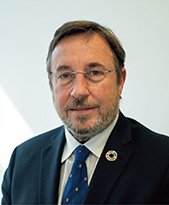

As Japan marks 70 years of development cooperation, the United Nations Development Programme (UNDP) is proud to continue our enduring partnership in driving global progress within a profoundly evolving development landscape. Yet our efforts to co-create life-changing development solutions – anchored in principles such as human security and dignity and putting the Humanitarian-Development-Peace Nexus into action – have remained consistent. At this milestone, I extend my deepest gratitude to the people and Government of Japan for their unwavering support of multilateralism and UNDP. Together, as we advance the Sustainable Development Goals, we are demonstrating that the most valuable investments we make today are the opportunities we leave for the generations to come.
KASHITANI Ichiro
President & CEO of Toyota Tsusho Corporation
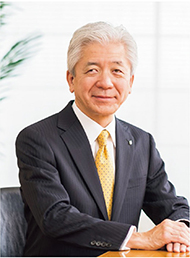

Toyota Tsusho Cooperation has long contributed to building environmentally friendly and healthy living through the development of industrial and social infrastructure, utilizing Japan’s ODA. In Africa, for example, we build geothermal power plants and provide refrigerated vehicles for vaccines. Japan’s distinctive approach to ODA lies in fostering trust through technical assistance and human resources development tailored to local needs, contributing to enhancing Japan’s standing in the international community. We firmly believe that Japan’s ODA, through co-creation with diverse partners, will continue to contribute to the realization of a sustainable society for future generations. Toyota Tsusho will continue to play a key role in this endeavour.
ADACHI Michiyo
Representative of NGO members of the Partnership Promotion Committee within the Regular Consultative Meeting between MOFA and NGOs, and Secretary General, Japanese NGO IVY
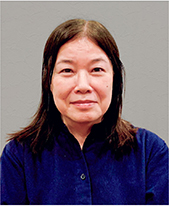

Japanese NGOs have grown rapidly since the 1990s, implementing projects funded by ODA. Currently, approximately 700 organizations with legal status are actively operating across the globe. Recognizing this trend, the revised Development Cooperation Charter in 2023 designates NGOs as “strategic partners in Japan’s development cooperation.” NGOs possess key strengths, such as high expertise in humanitarian and development assistance, in-depth understanding of local contexts, efficient use of funds, and the use of new approaches and innovative methods. In order to leverage these strengths and deepen cooperation with the Government of Japan, we anticipate new schemes that encourage NGO participation and increased funding levels comparable to those of other OECD countries.
Rentsendoo Jigjid
President of the Mongolia-Japan “Partnership Association,” former Minister of Mining of Mongolia and former Ambassador Extraordinary and Plenipotentiary of Mongolia to Japan
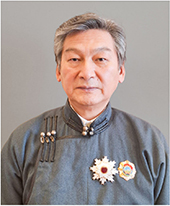

I extend my warmest congratulations on the 70th anniversary of Japan’s ODA. Japan’s ODA has played a vital role in strengthening democracy and laying the foundation for a free market economy in Mongolia. Japan’s assistance was successfully implemented in Mongolia in all sectors, including infrastructure, agriculture and livestock farming, industry, culture, education, humanitarian assistance, social welfare, health, and environment. It has significantly contributed to Mongolia’s success in overcoming the various challenges it faced during its transition to a new socio-economic system and in laying the foundation for future development. The relationship between Mongolia and Japan is developing steadily under the “Special Strategic Partnership for Peace and Prosperity.” May the friendly relations between Mongolia and Japan continue to flourish in the years to come.
Ibrahim Assane Mayaki
African Union Special Envoy for Food Systems, Former Prime Minister of Niger, Former Chief Executive Officer of the African Union Development Agency-New Partnership for Africa’s Development (AUDA-NEPAD)
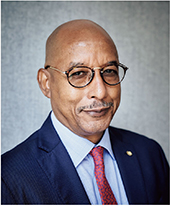
Japan’s cooperation with Africa through the Tokyo International Conference on African Development (TICAD) highlights a long-term partnership centered on sustainable growth, resilience, and mutual respect. Through its ODA, Japan has bolstered Africa’s infrastructure, healthcare, education, and governance, empowering African nations toward self-reliance. Looking ahead, Japan’s commitment to technology transfer, climate adaptation, and human resources development presents transformative opportunities in green energy, digital innovation, and food security. As Africa continues its growth, Japan’s focus on deepening trade relations and fostering private sector engagement promises an evolving partnership that addresses shared challenges and drives sustainable impact for both regions. This is a story of mutual trust and ownership.
Lyonchhen Tshering Tobgay
Prime Minister of Bhutan
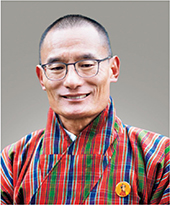

On behalf of the Royal Government and the people of Bhutan, I extend heartfelt congratulations on the remarkable milestone of the 70th anniversary of Japan’s ODA. Our cherished relations with Japan, which began with the visionary contributions of Dasho Keiji Nishioka* in the 1960s, stand as a testament to the enduring bonds of friendship between our two countries. Japanese ODA has touched almost every facet of Bhutanese development such as agriculture and rural development; economic recovery and economic infrastructure development; human resource development and improvement of education and healthcare services; and good governance. Your assistance has transformed our nation, ushering in an era of peace, prosperity, and happiness aligned with our Gross National Happiness philosophy. Above all, it has fostered and nurtured strong ties of friendship between our two peoples.
- * Dispatched to Bhutan in 1964 as an expert in agriculture, he dedicated 28 years to contributing to the modernization of Bhutan’s agriculture. In recognition of his achievements, he became the only foreigner to be awarded the title of Dasho by the King of Bhutan.
KONDO Erina
Member of the Advisory Panel on Sustainability of the International Community, G7/G20 Youth Japan, Steering Committee Member of the Next-Generation Platform for Promoting SDGs


For 70 years, Japan’s ODA has contributed to solving global issues such as education, environmental protection, and women’s empowerment, supporting the lives of countless individuals. These achievements represent significant investments in future generations. As a member of the young generation, I am proud of Japan’s commitment to fostering global solidarity and leading transformative change. For future economic growth and sustainable development, supporting the commercialization of innovative ideas alongside financial assistance is crucial. I sincerely hope that Japan’s ODA, through diverse partnerships, will continue to support innovation around the world and further contribute to addressing domestic and international challenges.
SUZUKI Makoto
ODA Consultant, Representative, Buena Fe GK
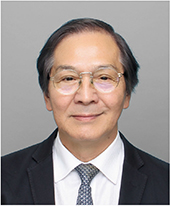

Since 1980, I have dedicated most of my life to working on ODA projects related to healthcare infrastructure development in 23 countries across Asia, Latin America, Africa, and the Pacific. “JICA,” which was initially not well known in developing countries, is now widely recognized in a number of countries. “High-quality” healthcare facilities built through Japan’s ODA have enabled many habitants in developing countries to access safe, reliable health services. In addition, local Biosafety Level 3 (BSL-3) laboratories supported by Japan that handle high-risk pathogens have attracted the attention of experts around the world. The importance of international cooperation is increasingly vital in preparing for future public health crises.