
Japan's Official Development Assistance White Paper 2008

 Next Page
Main Text > Part III Official Development Assistance in FY2007 > Chapter 2 Details about Japan's Official Development Assistance > Section 3. Assistance for Each Region > 1. East Asia
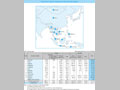
Japan's bilateral ODA to East Asia in 2007 was approximately US$1,113.36 million, 19.1% of total bilateral ODA.
<Features of East Asia>
East Asian countries have a close relationship with Japan in all aspects including politics, economy, and culture. As such, the development and stability of the East Asia region has great significance for the safety and prosperity of Japan itself. Japan has supported infrastructure development and human resource development in the region through ODA, and facilitated private sector investment and trade through means such as enhancing economic partnerships. Through these measures Japan has thus far contributed to the remarkable economic development in the East Asia region by advancing economic cooperation that coordinates ODA with investment and trade. For providing assistance, Asia is continuously designated as a priority region.
East Asia has attained rapid economic growth, and some countries, such as the Republic of Korea (ROK) and Singapore, have already been transformed from aid recipients into donors. On the other hand, there are still some least developed countries (LDCs) within East Asia, such as Cambodia and Laos. There are also countries like China, which still has internal disparities even though its economy has grown dramatically in recent years, or Viet Nam, which is in the process of transitioning from a centrally-planned economy to a market economy. In extending assistance, Japan fully takes into account such diversity in socio-economic conditions and changes in the respective assistance needs in each country.
<Japan's Efforts>
Japan's assistance activities in the East Asia region are aimed at advancing interregional cooperation and integration in line with shared basic values, promoting mutual understanding, and ensuring stability. To meet these objectives, cooperation is needed in establishing a stable process of democratization; reinforcing protection of human rights; building legal institutions; and developing infrastructure in order to promote economic growth. Also, various types of functional cooperation in fields such as finance, energy, disaster prevention and infectious diseases are essential. In addition, exchanges between people can significantly facilitate furthering mutual understanding between Japan and these countries. In 2007, the Japanese government announced the "JENESYS Programme,"71 inviting approximately 6,000 young people to Japan each year for five years. It is hoped that this will foster a pro-Japanese sentiment among the younger generation. A total of 6,150 young people visited Japan in 2007, the first year of the program, consisting in part of 2,000 from China, 1,200 from the Republic of Korea (ROK), and 1,900 from the Association of Southeast Asian Nations (ASEAN). In May 2008, in a speech entitled "The Future of Asia," then Prime Minister Fukuda declared that Japan and the Japanese people will work to create a network of never-ending expansion and development in the Asia Pacific region, with the Pacific Ocean becoming an "inland sea." He declared his intention to further strengthen "heart to heart" trust between the peoples of the Asia Pacific region, and forge bonds "acting together." To this end he promised five concrete actions.72
• Support for Southeast-Asia
Moreover, correcting disparities in the East Asian region through promoting integration of ASEAN and development of the Mekong region will lead to stability in the region and by extension benefit Japan. Through cooperation with ASEAN in the Mekong region, spanning parts of Cambodia, Laos and Viet Nam (CLV countries), Japan focuses on assistance in developing a socio-economic base, building institutions, and creating a regional network with a view to promoting integration and collaboration in the regional economy by raising standards. Furthermore, in 2007 Japan signed an Economic Partnership Agreement (EPA) with Thailand, the Philippines and Indonesia; EPA negotiations with Viet Nam too are advancing, and efforts aiming to strengthen wider economic relations including trade and investment, as well as building good labor relations, are in progress. By means of such efforts, Japan is supporting interregional integration through sharing of basic values, such as those of democracy, market economy, the rule of law and order, and promoting poverty reduction, as well as the lessening of disparities within the ASEAN region.
In November 2007, then Prime Minister Fukuda attended the 3rd East Asia Summit and the 11th Japan-ASEAN Summit Meeting in Singapore, and declared that he will proactively tackle the global issues of energy, avian influenza and the environment.
With the most ambitious goal being the formation of an ASEAN community by 2015, ASEAN is taking steps to reduce intraregional development disparities. Japan, in its relations with ASEAN, is giving priority to assisting the underdeveloped Mekong region. Thus, since April 2004 it has been implementing the Japan-Mekong Region Partnership Program, which rests upon the following three pillars: (1) integrating economies of the region and beyond, (2) expanding trade and investment between Japan and the Mekong region, and (3) sharing universal values and common goals of the region. Under this program, Japan has been expanding assistance to each CLV country as well as to the region as a whole, and will continue for three years until the end of 2009. In addition, Japan made a new contribution to the ASEAN Secretariat of US$52 million to promote Japan-ASEAN economic partnership, of which approximately US$20 million would be to assist the "Development Triangle," the CLV border region, which is one of the poorest parts of the Mekong Region.
At the January 2008 Japan-Mekong Foreign Ministers' Meeting, held in Tokyo, a document73 was signed for cooperation in the Development Triangle, in addition to which a further US$20 million was declared for supporting the streamlining of logistics in the East-West Economic Corridor. Japan is also reinforcing ties with the Asian Development Bank (ADB), which is engaged in a range of regional cooperation in the Asian region. It has created new schemes to support sustainable development by promoting investment in "Enhanced Sustainable Development for Asia (ESDA)" and energy conservation, the "Accelerated Co-Financing scheme with ADB (ACFA)," the "Investment Climate Financing Fund (ICFF)" and the "Asian Clean Energy Fund (ACEF)."
In July 2008, Japan decided to provide a Climate Change Program Loan to Indonesia, as the first step in development loans based on the "Cool Earth Partnership." Projects to improve the investment climate and energy-related cooperation are also in progress with Indonesia, and joint work is being carried out in areas such as disaster countermeasures, maritime safety in the Strait of Malacca near Singapore, climate change and protection of the environment. This includes cooperation in science and technology relating to global-scale issues.
In September 2007, monks protested against the authorities in Myanmar. There was pressure from the security authorities towards the protest and participants. Japan, in October, decided more stringent cooperation policies to Myanmar, which had previously been limited. However, because of the humanitarian necessity, it implemented grant aid in the form of the Project for Improvement of Maternal and Child Health Care Services (Phase VIII), through UNICEF. In 2008, in response to the major cyclone in May, Japan dispatched an international emergency relief and medical team of 23 to give humanitarian aid. Also, it provided financial support totaling around US$3,300 for food, health and education in July.
Recently, more and more of the countries of East Asia are becoming donors. Japan is promoting South-South Cooperation based in Malaysia and Thailand. Japan is also advancing the Japan-Singapore Partnership Program in which Japan extends technical cooperation to developing countries jointly with Singapore—a country that received assistance in the past. In April 2008, Japan, together with the Republic of Korea (ROK), invited major non-DAC donor countries as well as traditional DAC countries to Bangkok, Thailand, to hold the "Dialogue on Expanding Partnership for Development." It contributed to a comprehensive framework of aid coordination including these donors. At the Fourth Tokyo International Conference on African Development (TICAD IV) held in May 2008 too, the move toward expansion of partnership was confirmed through promoting interpersonal exchanges between Africa and the East Asian region to help the transfer of technology, along with trade and investment.
Since 1979, Japan's assistance to China has helped the infrastructure development in coastal areas, environmental measures, improvement in the basic human needs sectors including health and medical care, and human resource development, among other efforts that contribute to the steady development of its economy. As such, Japan's assistance has played a significant role in promoting and sustaining China's reform and opening policy. Most of the assistance in these areas has been provided to China in the form of loan aid. The assistance can be valued as having supported the development of economic relations between Japan and China as well as having functioned as one of the main pillars for the multilayered Japan-China relationship. Regarding this point, the representatives of China, including at the summit-level, have expressed their gratitude on many occasions.74 In light of China's recent remarkable economic growth, Japan and China recognized that ODA loans for the country from Japan will come to a harmonious end by the 2008 Beijing Olympics. Therefore, new provision of loan aid was halted with the six Exchanges of Notes in December 2007.
Yet, the people of Japan and China face many common challenges to tackle, including global issues such as environmental issues and infectious diseases that affect Japan directly. During Hu Jintao's official visit to Japan in May 2008, in a Joint Statement between the Government of Japan and the Government of the People's Republic of China, the leaders of both countries confirmed that cooperation will be undertaken mainly in the areas of energy and the environment, while a joint declaration was issued relating to climate change. Moreover, increasing the mutual understanding between the people of Japan and China is an important issue from the perspective of facilitating the sound development of Japan-China relations. In light of this situation, grant aid is currently being implemented with its focus narrowed on: (1) areas conducive to resolving common challenges faced by the people of Japan and China such as the environment and infectious diseases, and (2) areas conducive to promoting mutual understanding and increasing exchanges between Japan and China. Also, in terms of technical cooperation, Japan is particularly focusing on projects aiming for the transition to a market economy, observance of international rules, promotion of good governance, and energy conservation. Exchanges of people can serve as an important means for transmitting Japanese values and culture to China. Based on the conditions surrounding bilateral relations, the cooperation will be conducted with appropriate deliberation from a comprehensive and strategic viewpoint.
One of the major events in 2008 was the large earthquake which occurred in Sichuan Province on 12 May, causing vast amounts of damage. On 13 May, following the earthquake, the Japanese Government decided to provide emergency relief amounting to ¥500 million, and granted emergency supplies corresponding to approximately ¥60 million. Moreover, an international emergency relief team of 61 and a medical team of 23 were dispatched to the region. As additional support, on 30 May, the Government of Japan announced further support of up to a total of ¥500 million. This was the first time that China had admitted foreign Search and Rescue Teams into the country. Yet, the teams were welcomed with high esteem and a great sense of gratitude. In July 2008, President Hu Jintao, who had come to Japan for participating in the G8 Hokkaido Toyako Summit, expressed his country's thanks to the international emergency relief team of Japan. Also, at the top-level meeting that took place on the occasion of the above Summit, both leaders agreed that Japan would promote various forms of cooperation to transfer Japanese experience, knowledge, and technology for post disaster rehabilitation.