
Column
OECD-DAC Network on Development Evaluation (EvalNet) and Japan’s Cooperation
The Network on Development Evaluation (EvalNet) was established in 1983 as a subsidiary organization under the Organisation for Economic Co-operation and Development’s Development Assistance Committee (OECD-DAC). 51 countries and international organizations (33 DAC members including Japan, 7 partner countries, and 11 international organizations) participate in regular meetings held at OECD headquarters in Paris to promote the evaluation efforts of each country and enhance the effectiveness of development assistance by sharing best practices regarding evaluation systems and results, and discussing improvements to evaluation methods.
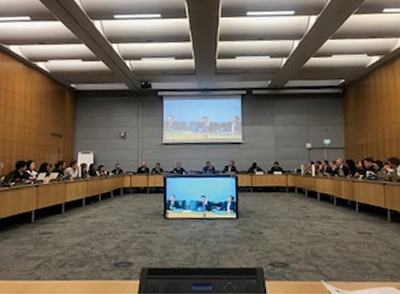
The 42nd EvalNet Meeting held at OECD headquarters in Paris
The DAC evaluation criteria (Relevance, Coherence, Effectiveness, Impact, Efficiency, Sustainability), which were adopted by the network’s predecessor in 1991 and revised in 2019, are utilized as the foundation for evaluation at many development assistance institutions in the world. In MOFA’s ODA evaluations, we set evaluation criteria (Relevance of Policies, Effectiveness of Results, Appropriateness of Processes) based on the DAC Evaluation Criteria in the “Evaluation from Development Viewpoints.” The Japanese translation of the new DAC evaluation criteria was prepared in cooperation with the Japan Evaluation Society (JES). Additionally, we have created a Japanese translation of Applying Evaluation Criteria Thoughtfully, which outlines guidelines for applying these criteria on the ground, under the supervision of JES.
In 2023, celebrating the 40th anniversary of the establishment of EvalNet, a session was held at the OECD that invited non-DAC members as special observers, with over 150 participants from 62 organizations. Participants examined past evaluations and agreed on the importance of investing in the utilization of evaluation, that the term accountability includes the accountability to learn from and utilize evaluation findings, and the important role of actively involving partner countries in evaluation processes. Furthermore, participants expressed a desire to explore real-time evaluation methods for great policy influence. They also expressed their interest in how advancements in technology could help accelerate the feedback of evidence to policy making, and how AI could streamline the evaluation process.
Japan emphasizes improving the evaluation capacity of partner countries, a topic that is discussed almost every time at meetings of the network, and shares the “ODA Evaluation Workshop” hosted by MOFA since 2001 as a best practice. At meetings, we also introduce our efforts where MOFA requests governments and agencies in partner countries to conduct evaluations of Japan’s development programs or projects in areas such as health, transportation, and disaster prevention. Moreover, in response to requests from the EvalNet Secretariat, we provide information on cases of third-party evaluations conducted by Japan, and exchange information with other members at meetings. For example, regarding the Evaluation of Japan’s COVID-19 Related Cooperation implemented by MOFA in FY2024, we received a request from the Secretariat for cooperation to use as a reference for their joint evaluation with the COVID-19 Global Evaluation Coalition (GEC). Therefore, we have been actively involved by providing data, and Japan’s cooperation cases are mentioned in the joint evaluation report by GEC. We will continue actively cooperating for the enhancement and development of the network’s activities.
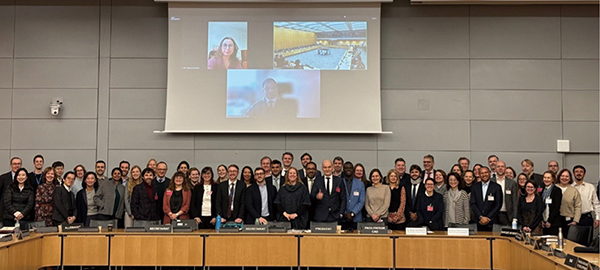
Group photo of participants at the 42nd Meeting held in February 2025
© OECD / DAC Network on Development Evaluation, 2025.