
Peacekeeping and Peacebuilding
Column by Miki SAKIYAMA, Women and Youth Empowerment Specialist at UNFPA, a Primary Course Associate of the FY2024 Program for Global Human Resource Development for Peacebuilding and Development
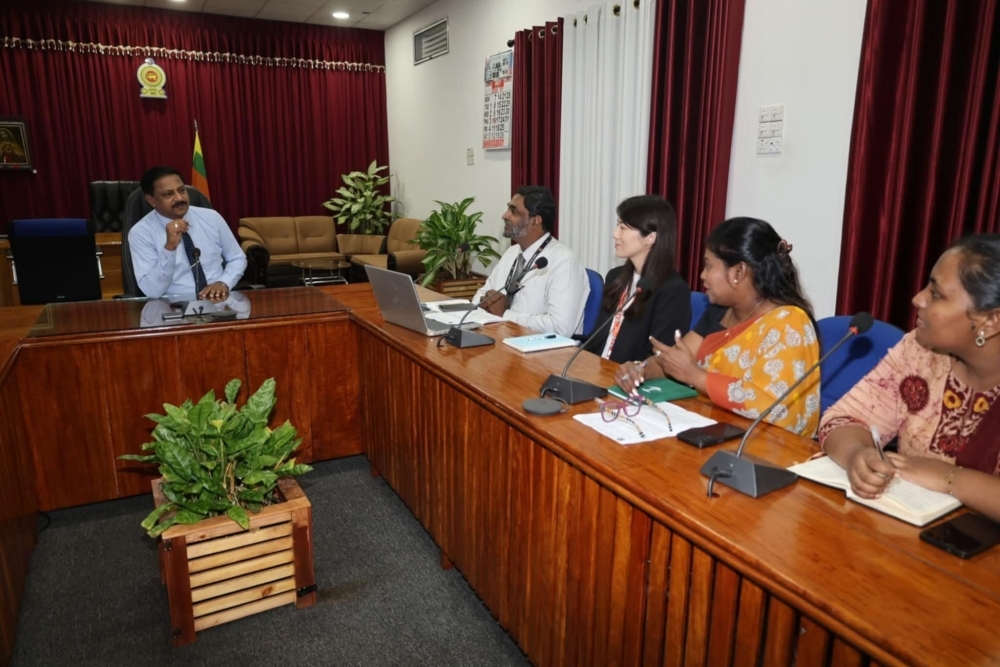 Meeting with the Jaffna District Secretary for the PBF project
(Provided by Jaffna District Secretariat)
Meeting with the Jaffna District Secretary for the PBF project
(Provided by Jaffna District Secretariat)
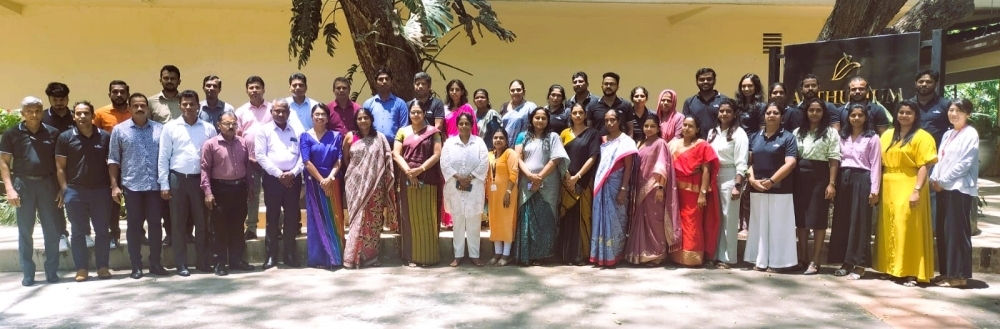 Gender training session for workplace forums
(Provided by UNFPA)
Gender training session for workplace forums
(Provided by UNFPA)
Participating in the Program for Global Human Resources Development for Peacebuilding and Development
I am Miki Sakiyama, a Program Associate in the “Primary Course” of “the Program for Global Human Resource Development for Peacebuilding and Development,” commissioned by the Ministry of Foreign Affairs of Japan. Through the overseas assignment of this course, I am working as a United Nations Volunteer at the United Nations Population Fund (UNFPA) Sri Lanka Office.
Sri Lanka is an island nation in the Indian Ocean. A Buddhist country with pro-Japanese sentiments, it is famous for its tea, popularly known as “Ceylon Tea.” However, even after the end of the conflict that lasted from 1983 to 2009, the country faced economic stagnation due to events like the 2019 Easter bombings and the spread of COVID-19 since 2020. This led to an external debt default in 2022 and an economic crisis. As the economic situation worsened, shortages of daily necessities and fuel led to public discontent toward the government, leading to protests across the country. While the Sri Lankan economy is showing signs of steady recovery, it is imperative to nip in the bud the various seeds of conflict rooted in the country's ethnic, religious, and economic realities, and to foster harmony and unity across society.
In this context, I am a focal point to manage a project aimed at strengthening peace and cohesion in Sri Lankan society through the promotion of comprehensive social dialogue at the national, regional, and community levels. This project is funded by the Peacebuilding Fund (PBF) and jointly implemented by UNFPA, the International Labour Organization (ILO), and the United Nations Educational, Scientific and Cultural Organization (UNESCO). Specifically, UNFPA plays a role in gender mainstreaming, implementing the project that takes into account the different needs and impacts on men and women. For example, within government offices, we provide training on gender and Diversity, Equity, and Inclusion (DEI) to public officials who are part of “Workplace Forums” that offer constructive dialogue on workplace issues. This training aims to prevent gender-based violence and harassment in the workplace. By fostering gender-sensitive workplaces, we aim to prevent labor disputes, build social cohesion and seek to support the pathway towards comprehensive social and economic recovery. We conduct similar training programs not only for government agencies but also for private companies.
Furthermore, in response to the 2022 economic crisis, UNFPA implemented a humanitarian assistance project funded by Japan's supplementary budget (JSB) to strengthen the social resilience of women, girls, and youth in Sri Lanka. In the FY2023 JSB project, about 827,700 vulnerable individuals, including pregnant and lactating women, women and girls of reproductive age, adolescents, persons with disabilities, young people, and older women across 10 districts, received age-appropriate kits and livelihood support supplies and gained access to information and services on sexual and reproductive health and rights, as well as support for survivors of gender-based violence.
Thanks to the longstanding friendly relations Japan has built with Sri Lanka, there are times when I feel my daily work as a Japanese national is made easier. I am deeply honored to be able to contribute to Sri Lanka's peace and development initiatives. While significant achievements have been made through the support of the Japanese Government much has been achieved, more gaps still remain. In this context, the work we do as Japanese nationals towards fulfilling UNFPA's mandate is significant and vital to ensure a resilient Sri Lanka.