
Organization for Economic Cooperation and Development (OECD)
2026 OECD Meeting of the Council at Ministerial Level (Results)
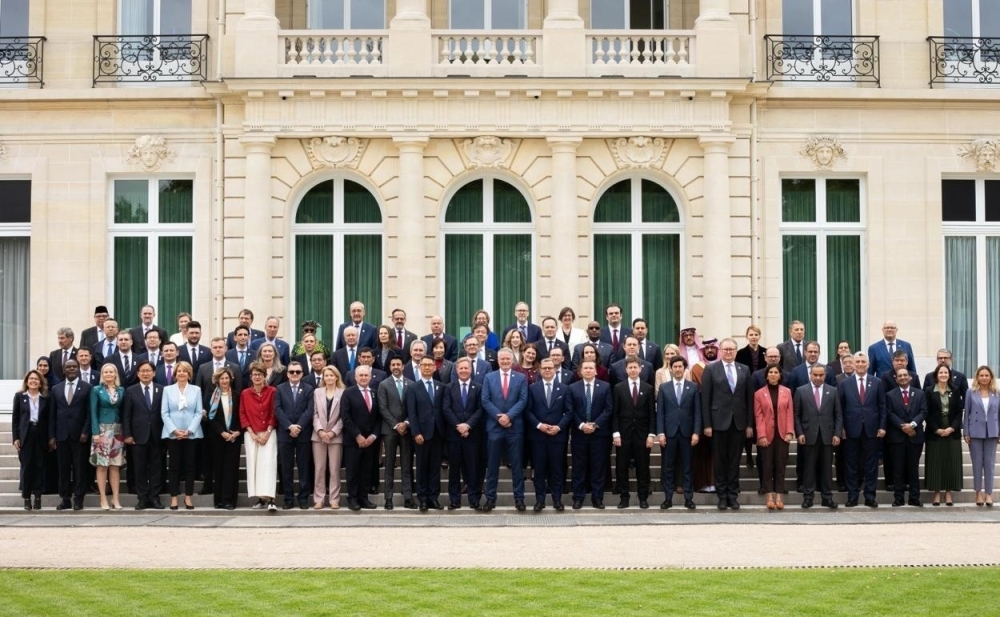 (Photo: OECD)
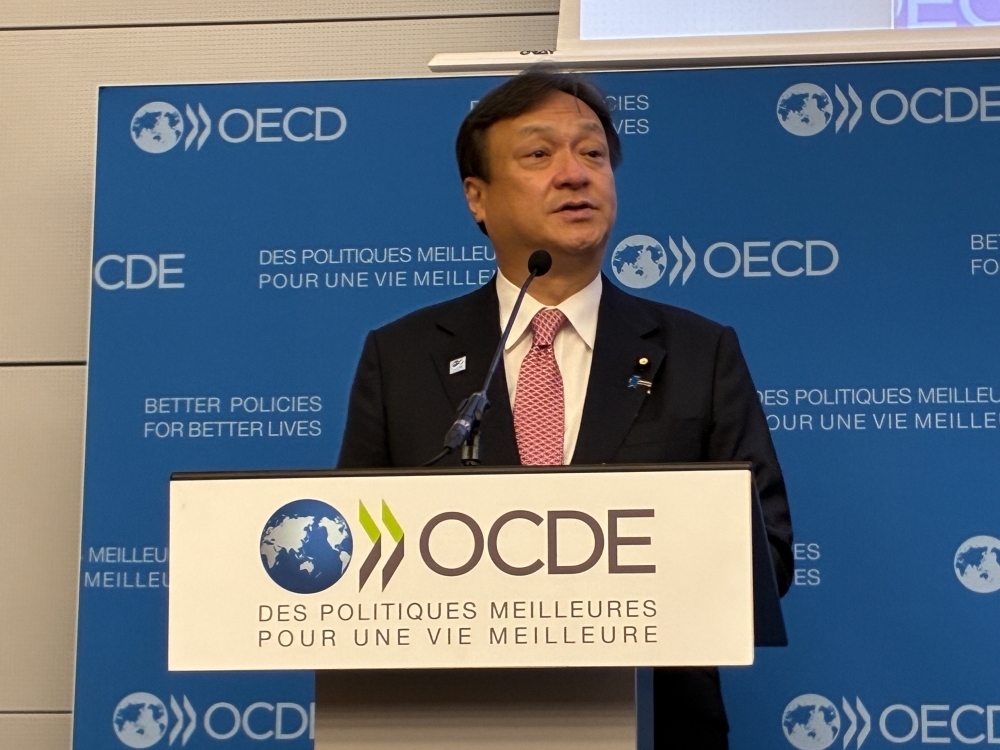
From June 2 to 4, the OECD Meeting of the Council at Ministerial Level (MCM) and related meetings were held in Paris, France. From Japan, Mr. HORII Iwao, State Minister for Foreign Affairs of Japan, Mr. IWATA Kazuchika, State Minister of Cabinet Office, Mr. INO Toshiro, State Minister of Economy, Trade and Industry, and others attended the meetings. The summary of the results is as follows.
【Main Points】
- The MCM was held under the theme of " Getting Industrial Policies Right for Open Markets, Growth and Prosperity" with the Republic of Finland as the chair (H.E. Dr. Alexander Stubb, President (video message), H.E. Mr. Petteri ORPO, Prime Minister, H. E. Ms. Elina Valtonen, Minister for Foreign Affairs, H.E. Ms. Riikka Purra, Minister of Finance, and others attended), and the Republic of Korea (ROK) and New Zealand as vice-chairs. Discussions were held on strengthening the international trade system and economic security, building an inclusive global economy, and industrial policies including AI.
- State Minister HORII emphasized the importance of the OECD's role in addressing complex challenges, including geopolitical issues, and achieving sustainable economic growth. He then stated that Japan would actively promote economic security-related initiatives based on the "Japan-OECD Cooperation Plan on Economic Security" which was issued during Secretary-General Cormann's recent visit to Japan. Furthermore, he stated that Japan has always attached importance to the OECD's Southeast Asia outreach and expressed its intention to continue actively contributing to the region through the Southeast Asia Regional Programme (SEARP).
1. Participating Countries and Organisations
- OECD Member Countries: 38 countries (Chair: Finland, Vice-Chairs: ROK, New Zealand)
- Accession Candidates: Argentina, Brazil, Bulgaria, Croatia, Indonesia, Peru, Romania, Thailand
- Other Invited Countries/Regions: Bahrain, Egypt, Kenya, Kuwait, Morocco, Oman, Paraguay, Philippines, Qatar, Saudi Arabia, Singapore, United Arab Emirates, Ukraine, Uruguay
- Others: EU, AU (African Union), BIAC (Business and Industry Advisory Committee), TUAC (Trade Union Advisory Committee), IEA (International Energy Agency), WTO (World Trade Organization), WBG (World Bank Group), IMF (International Monetary Fund) and others
2. Main topics and overview
This MCM was held under the theme of "Getting Industrial Policies Right for Open Markets, Growth and Prosperity" and discussions were held by relevant ministers and others. As an outcome document, a Chair's Statement (PDF) was issued.
Tuesday, June 2
Joint Latin America and the Caribbean (LAC) and Southeast Asia (SEA) Regional Programme Working Lunch
- This meeting, hosted by the Government of Japan, was held to commemorate the 10th anniversary of the establishment of the Latin America and Caribbean Region Programme (LACRP), and discussions were held on the theme of "Building Reliable Value Chains between the Latin America and Caribbean Region and the Southeast Asia Region."
- State Minister HORII emphasized the importance of strengthening trade and investment cooperation and building sustainable value chains between the two regions amidst increasing economic uncertainty, and stated that Japan would continue to actively support OECD outreach activities as a "bridge" between the two regions.
Side Event " Advancing International Co-operation on AI: the AI Policy Toolkit and the Hiroshima AI Process (HAIP) Reporting Framework "
- This event, led by the Governments of Japan, Costa Rica, and the United Kingdom, and the OECD Directorate for Science, Technology and Innovation, analyzed AI policy issues in various countries and announced the first edition of the OECD AI Policy Toolkit, which supports the formulation of policies in each country, as well as reporting on the revised version of the Hiroshima AI Process Reporting Framework.
- In the opening remarks, State Minister HORII emphasized the importance of co-creating a "safe, secure, and trustworthy AI" ecosystem, and stated that he highly appreciates the OECD's significant contributions to building international governance on AI. He also congratulated the publication of the AI Policy Toolkit, which was announced on the same day, while touching upon the importance of the toolkit and the process of listening to the needs of non-member countries.
Wednesday, June 3
Southeast Asia Regional Programme (SEARP) Meeting
- This meeting, led and hosted by Canada and the Philippines, the current co-chairs of SEARP, discussed progress made under the Programme and its future direction.
- State Minister HORII stated that Japan has led the OECD's outreach to Southeast Asia, including the launch of the SEARP, and has actively supported initiatives in the AI and shipbuilding sectors in recent years. He also introduced the "Japan-OECD Cooperation Plan on Economic Security", emphasizing that Japan will continue to lead Southeast Asia outreach through the SEARP in areas including economic security. Furthermore, he welcomed the progress in the accession processes of Indonesia and Thailand and expressed Japan's continued support for their accession processes.
(1) Opening Ceremony
- At the outset, following an opening video message from Finnish President Stubb as the chairing country, OECD Secretary-General Cormann spoke about recent OECD initiatives. In addition, opening remarks were made by Finnish Prime Minister Orpo, and by the vice-chairing countries, the ROK and New Zealand. Furthermore, H.E. Mr. Taras KACHKA, Deputy Prime Minister for European and Euro-Atlantic Integration of Ukraine delivered a speech, expressing gratitude for the solidarity and continued support of OECD member countries for his country.
(2) Session 1: Balancing the Goals and Impacts of Industrial Policy
- Discussions were held on industrial policy measures that foster economic growth, innovation, and the sustainable renewal of industries.
- Views were exchanged on how to balance different goals of industrial policies, such as competitiveness and security concerns, and the trade-offs. The importance of sharing examples of national industrial policies and strategies and the importance of close inter-governmental cooperation were also reaffirmed.
(3) Session 2: The Enabling State: Fostering Competition, Better Regulation and Fiscal Responsibility
- Based on the OECD Economic Outlook and recent OECD research, an exchange of views took place on effective fiscal and structural reform policies to maximize economic benefits across OECD member countries.
- It was confirmed that sound regulatory frameworks and effective competition policy are important for promoting market dynamism, ensuring fair competitive conditions, and strengthening productivity-driven growth and competitiveness.
(4) Session 3: Industrial Policies for Advancing Digital and Emerging Technologies
- Discussions focused on digital and emerging technologies and the role of skills, labor, and human capital, confirming the importance of accelerating the development and dissemination of digital and emerging technologies, including AI.
- It was also confirmed that education, training, and labor policies such as anticipating future workforce needs amid demographic changes, promoting inclusive skills development, and supporting AI transitions that generate quality jobs are effective in supporting the efficient deployment of digital and emerging technologies.
Thursday, June 4
(5) Session 4: Strategic Orientations for the OECD
- Discussions were held on the OECD's future priorities from a strategic perspective.
- In particular, there was an exchange of views on the OECD's future direction for contributing to both member and non-member countries, leveraging its common values, principles, and strengths.
- Japan stated that economic security is a common challenge faced by all member countries, and expressed its intention to actively promote economic security-related initiatives based on the "Japan-OECD Cooperation Plan on Economic Security" which was announced during Secretary-General Cormann's recent visit to Japan.
(6) Session 5: Aligning Industrial Policies with Open and Fair Trade and a Level Playing Field
- Discussions were held on ensuring open markets, free and fair trade, a level playing field, and addressing economic security concerns.
- In particular, regarding economic security, the importance of cooperation was confirmed towards strengthening supply chain resilience and ensuring access to critical technologies and raw materials.
(7) Session 6: Industrial Policy, Investment, and Development
- Discussions were held on industrial policy to promote sustainable growth and investment for development, and on improving the investment environment.
- Countries presented their efforts towards domestic and foreign direct investment (FDI) and the OECD's Policy Framework for Investment, confirming the importance of mutual learning regardless of economic development stage or economic scale.
3. Bilateral Meetings, etc.
State Minister HORII took the opportunity of the MCM to hold bilateral meetings with Dr. Fatih Birol, Executive Director of the International Energy Agency (IEA), Ms. Anabel González, Vice President for Countries and Regional Integration of the Inter-American Development Bank (IDB), Mr. Marcin Bosacki, Secretary of State for Foreign Affairs of the Republic of Poland, H.E. Dr. Manuel Tovar, Minister of Foreign Affairs and Worship of the Republic of Costa Rica, H.E. Mr. Sihasak Phuangketkeow, Deputy Prime Minister and Minister of Foreign Affairs of the Kingdom of Thailand, and H.E. Mr. Airlangga Hartarto, Coordinating Minister for Economic Affairs of the Republic of Indonesia. He also held brief talks with OECD Secretary-General Mathias Cormann and others, and exchanged views with Japanese staff working at the OECD.
In his meetings with Thai Deputy Prime Minister and Minister of Foreign Affairs Sihasak and Indonesian Coordinating Minister for Economic Affairs Airlangga, State Minister HORII conveyed Japan's continued support for the OECD accession processes of both countries.
Furthermore, State Minister HORII exchanged views with Ambassadors of Permanent Delegations to UNESCO in Paris regarding cooperation within UNESCO and other matters.