
Asia
The 16th East Asia Summit (EAS) Foreign Ministers’ Meeting
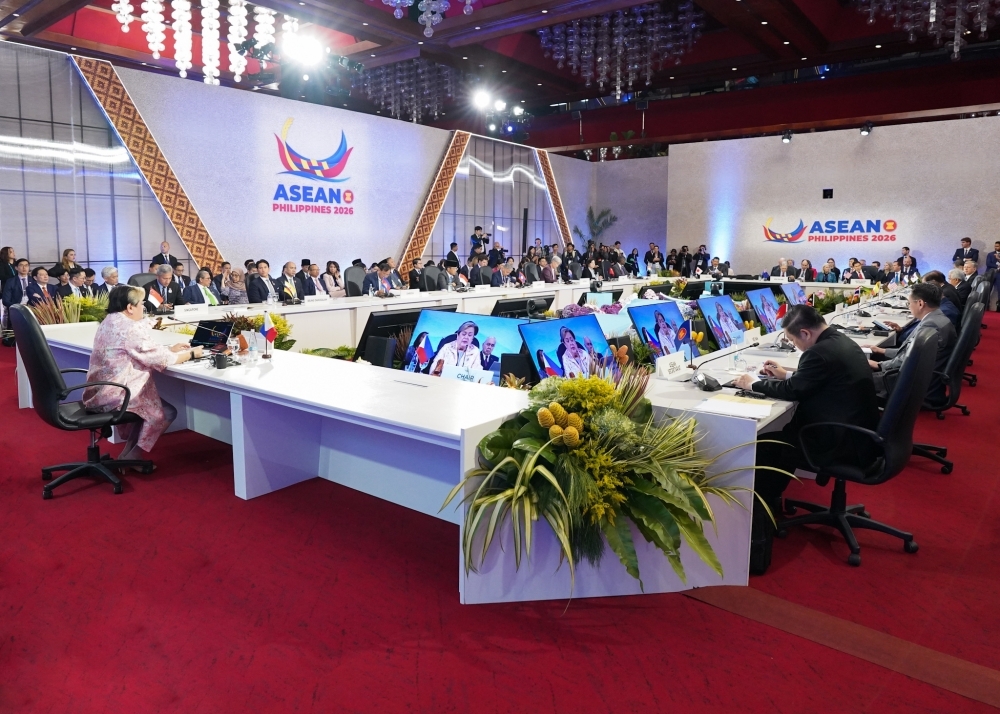
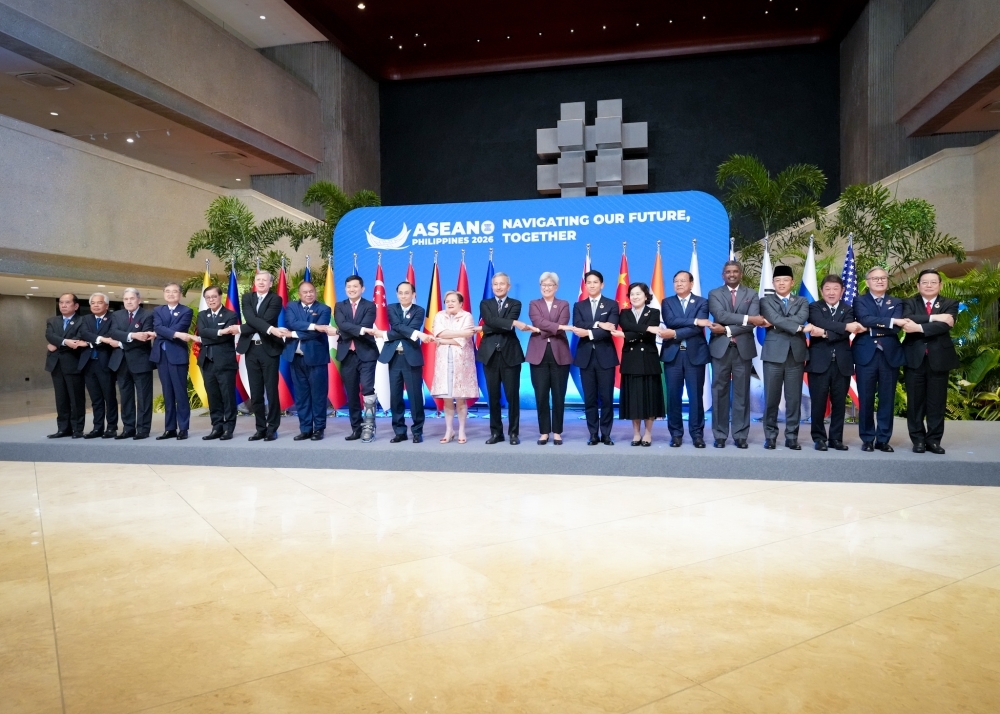
On July 23, commencing at 2:30 p.m. local time (3:30 p.m., JST) for about 2 hours , the 16th East Asia Summit (EAS) Foreign Ministers’ Meeting was held in Manila, the Philippines. Mr. MOTEGI Toshimitsu, Minister for Foreign Affairs of Japan, attended the meeting.
1. General Remarks
Minister MOTEGI reiterated Japan's full support for ASEAN Centrality and unity, the "ASEAN Community Vision 2045," and the "ASEAN Outlook on the Indo-Pacific (AOIP)," emphasizing the importance of maintaining and strengthening a free and open international order based on the rule of law. Minister MOTEGI also stated that, from this perspective, the EAS plays an important role as a premier forum in the region.
2. Regional and International Affairs
- Minister MOTEGI outlined Japan's position as follows:
- East China Sea and South China Sea
Unilateral attempts to change the status quo by force or coercion are unacceptable, anywhere in the world, including in the East China Sea and the South China Sea. Japan strongly expects that the Code of Conduct in the South China Sea (COC) will be in accordance with UNCLOS and respect the legitimate rights and interests of all stakeholders using the South China Sea. - North Korea
The complete denuclearization of North Korea is an obligation under international law as set out by the UN Security Council. Sanction evasion and malicious cyber activities must not facilitate illegal nuclear and missile development. Japan calls for the continued understanding and cooperation of each country on the abductions issue. - Myanmar
For the improvement of the situation in Myanmar, the immediate cessation of violence, political progress, such as the release of those who are detained and sincere dialogue among parties concerned, and efforts to improve the lives of the people are important. Japan will continue to support ASEAN's efforts, including the implementation of the "Five-Point Consensus." - Countermeasures against Online Scams and Related Crimes
The problem of organized fraud, including online scams, remains serious in Southeast Asia. Japan aims to strengthen concrete cooperation with various countries. - Middle East
The swift and lasting restoration of free and safe navigation through the Strait of Hormuz without any additional cost is essential. Japan also intends to work on strengthening regional energy security through "POWERR Asia".
- East China Sea and South China Sea
- Statements by other participating countries regarding Regional and International Affairs
Other participating countries expressed concerns about the situation in the East China Sea and the South China Sea, underscored the importance of freedom of navigation and overflight as well as the peaceful settlement of disputes in accordance with international law.
Regarding North Korea, many participating countries made remarks about the importance of complete denuclearization and full implementation of UN Security Council resolutions and expressed concerns about the advancement of its nuclear and missile development. Regarding the situation in Myanmar, many participating countries expressed serious concerns and emphasized the importance of implementing the "Five-Point Consensus."
Regarding the problem of organized fraud, including online scams, some participating countries underscored the need for collaborative efforts among relevant countries.
Regarding the situation in the Middle East, many participating countries emphasized the importance of free and safe navigation through the Strait of Hormuz.
3. Future Directions
Minister MOTEGI stated that Japan has contributed to the peace and prosperity in the region as a peace-loving nation that upholds freedom, democracy, human rights, and the rule of law. Minister MOTEGI added that Japan will remain steadfast on this path and contribute to peace, stability, and prosperity through the promotion of the "Free and Open Indo-Pacific (FOIP)," which shares the fundamental principles with AOIP.